
In the early days of my watch and jewelry business, I lived on my phone. Someone would message asking about pricing, and I would type out the same answer I had typed a hundred times before. Then another message asking about delivery time, the same reply again. By the time I answered the tenth person asking the exact same three questions, I had no energy left for the customer who actually wanted to buy. I was working constantly, and somehow still losing sales simply because I could not reply fast enough.
That exhausting cycle is exactly what marketing automation eventually solved for me. And in this guide, I will break down what it actually is, how it works, and how to set it up so your business can genuinely sell while you sleep.
What Is Marketing Automation?
Marketing automation is the use of software to deliver the right message to the right person at the right time, automatically, without you manually typing, sending, or following up on every single interaction yourself.
Let me be clear about something important here: automation does not create sales by itself. It does not replace genuine value or a good product. What it does is to remove the repetitive manual work, like the same questions, the same follow-ups, the same reminders, so that you can consistently nurture leads and guide people toward buying, even when you are not actively online.
Marketing automation vs email marketing: Email marketing is one specific channel automation can use, while automation is the broader system, like the triggers, workflows, and logic that can run across email, WhatsApp, SMS, and more, not just one channel.
Marketing automation vs CRM: A CRM (customer relationship management system) stores and organizes your customer information. Automation is what acts on that information by sending messages, moving leads through stages, and triggering follow-ups based on what a customer does.
A common misconception: People assume automation means everything runs on autopilot forever with zero involvement. In reality, automation still needs to be built thoughtfully, reviewed regularly, and adjusted as your business changes.
How Marketing Automation Helps You “Sell While You Sleep”
Here is what that phrase actually means in practice, because it sounds almost too good to be true until you experience it directly.
Automation can capture a lead the moment someone shows interest, even at 2 am when you are asleep. It can send an instant follow-up message answering the exact question that the customer asked — the same one I used to type manually every single time. It can nurture a prospect over several days with helpful information before ever asking for a sale. It can recover an abandoned cart by reminding someone who almost bought but got distracted. It can recommend a related product, confirm an appointment, deliver a digital product instantly upon payment, and even follow up after a sale to encourage a repeat purchase.
Read, How to Validate a Product or Business Idea Before You Launch
None of this replaces the sales process. Rather, it supports it, running continuously in the background while you focus on higher-value work instead of repetitive replies.
How Marketing Automation Actually Works
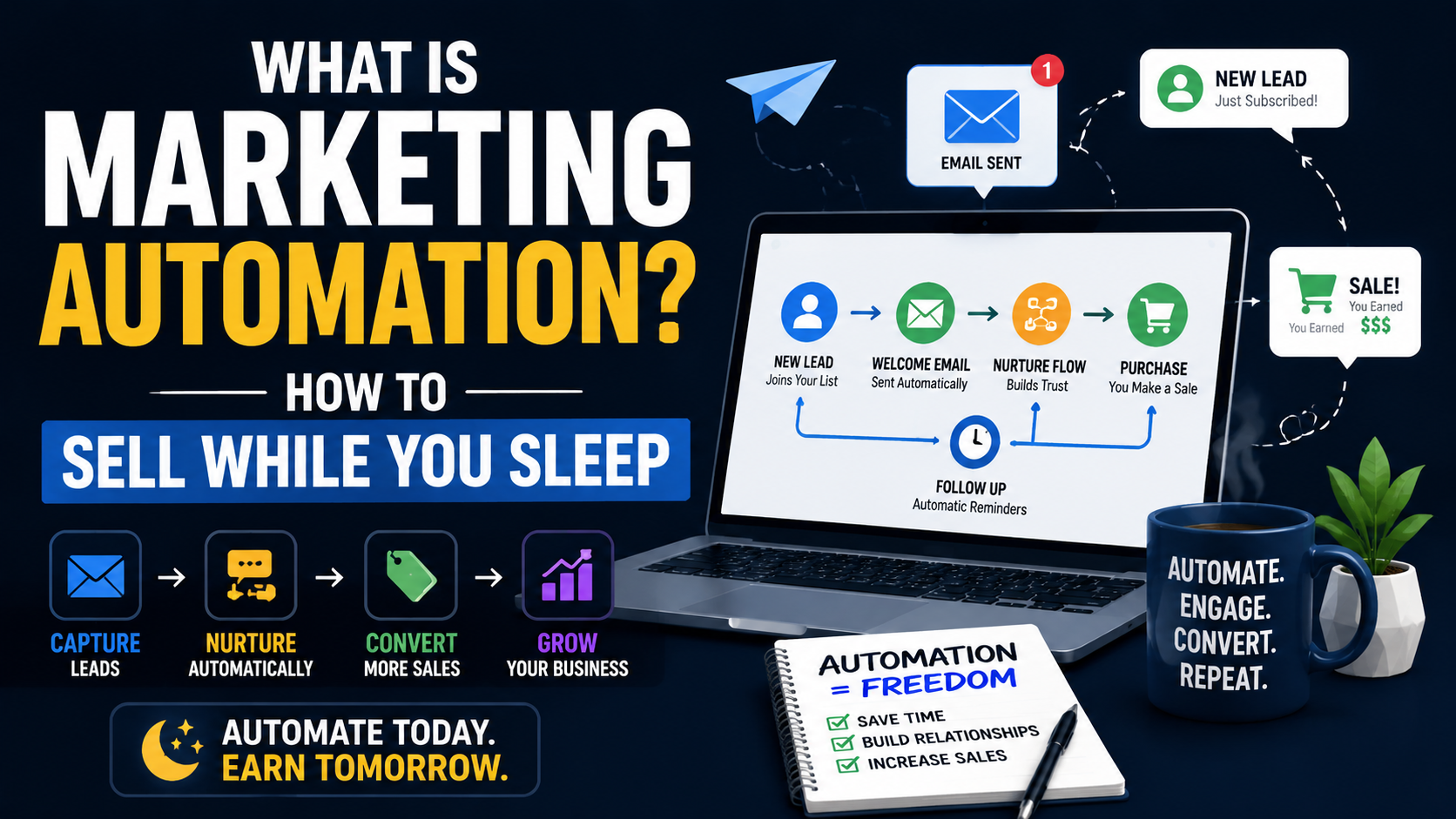
Here is a simple example of what an automated workflow looks like in practice:
A visitor lands on your website or social media page. They see an offer for a free guide and provide their email or phone number to get it. This automatically adds them to your list. A welcome message is sent immediately, delivering what they signed up for. Over the following days, a nurturing sequence shares helpful, relevant content — not sales pitches, just genuine value. Eventually, a specific product offer is presented. If they click but do not buy, a follow-up message triggers automatically based on that exact behavior. Once they do purchase, a post-purchase sequence begins, building loyalty and setting up the next sale.
This entire sequence runs without you manually sending a single message after the initial setup, exactly the relief I needed after months of typing the same responses over and over.
Common Marketing Automation Workflows You Can Set Up
Some of the most practical, high-impact workflows include:
- Welcome message series for new subscribers or followers
- Lead nurturing campaigns that build trust before pitching
- Cart abandonment reminders for anyone who almost bought
- Product recommendations based on what someone already showed interest in
- Re-engagement campaigns for contacts who have gone quiet
- Appointment or order confirmations sent instantly
- Customer onboarding sequences after a purchase
- Feedback and review requests timed perfectly after delivery
- Referral campaigns encouraging happy customers to share you
For my own business, the first workflow I ever built was the simplest one, an automated reply answering the three most common questions I received: price, delivery time, and payment method. That single workflow alone gave me back hours every single day.
What Can You Actually Automate?
Automation extends far beyond email. You can automate WhatsApp messages, SMS campaigns, social media posting schedules, lead scoring (ranking how “ready to buy” someone is), customer segmentation, appointment reminders, internal notifications to yourself, review requests, and even instant digital product delivery the moment a payment clears.
For a business like mine, WhatsApp automation made the single biggest difference, since that was where the overwhelming majority of my customer conversations happened in the first place.
The Key Building Blocks of a Marketing Automation System
Every automation system, regardless of platform, is built from the same core components:
Lead capture forms collect contact information from interested visitors. Facebook ad manager has an instant form for that. Landing pages present your offer clearly. A CRM or contact list stores everyone who has engaged with you. Workflows define the actual sequence of messages. Triggers determine what starts a workflow, such as a form submission, a click, or a purchase. Conditions allow the workflow to branch differently depending on someone’s specific behavior. Segmentation groups contacts based on shared characteristics or interests. Analytics show you what is actually working.
Understanding these building blocks matters because it lets you diagnose problems later. Problems like if a workflow is not converting well, you can identify exactly which component needs adjusting.
Personalization Makes Automation More Effective
The biggest fear people have about automation is that it will feel robotic and impersonal, and honestly, if it is done poorly, it does. Most especially when using it to sell digital products. The goal should be relevance, not just volume.
Dynamic content like using someone’s name, referencing what they specifically showed interest in, or timing a message based on their actual behavior makes automated messages feel personal rather than generic. When I built my own automated responses, I made sure the tone matched exactly how I would naturally reply to a real customer, not a stiff corporate script. Customers rarely noticed they were speaking to an automated system at all, because the responses still felt like me.
Marketing Automation Works Across Every Type of Business
This is not just for large ecommerce brands. Ecommerce stores use it for cart recovery and product recommendations. Service businesses and coaches use it for appointment reminders and lead nurturing. Freelancers and agencies use it to follow up with prospects automatically. Online course creators use it to deliver lessons on a schedule. Local businesses, exactly like my own watch and jewelry brand, can use it simply to answer common customer questions instantly, any time of day.
The scale of automation should match the scale of your business. For example, a solo entrepreneur does not need the same complexity as a large company, but the underlying principle applies universally.
Common Marketing Automation Mistakes to Avoid
Automating a broken process: If your manual sales process is not working well, automating it just makes the same mistakes happen faster and more consistently.
Red, How to Position Your Product or Service So It Sells Itself
Sending too many messages: Overwhelming contacts with excessive automated messages drives people to unsubscribe or ignore you entirely.
Ignoring personalization: Generic, robotic-sounding messages undermine the trust automation is supposed to help build.
Setting it up once and never revisiting it: Customer needs and behavior change over time. A workflow built a year ago may no longer reflect what actually converts today.
Forgetting mobile users. Since most of my own customers interact with me directly through their phones, any automated message needs to read naturally in a mobile chat window, not as a long, formal paragraph.
Best Practices for Getting Automation Right
Start with just one workflow rather than trying to automate everything simultaneously. I began with a single automated FAQ response before building anything more complex. Focus every message on genuine customer value, not just pushing a sale. Segment your audience so different types of customers receive relevant messaging rather than one generic sequence for everyone. Write like an actual human being, not a corporate script. Test and review your workflows regularly rather than assuming they will stay effective forever.
Metrics to Track for Marketing Automation Success
To know whether your automation is genuinely working, track your open rate (are people seeing your messages), click-through rate (are they engaging with what you send), conversion rate (are they actually buying), lead-to-customer rate, and your unsubscribe rate, which tells you quickly if a workflow is annoying rather than helping.
Popular Marketing Automation Tools
Depending on your business size and budget, tools like Mailchimp, Brevo, ActiveCampaign, Kit (formerly ConvertKit), and HubSpot each offer different strengths. Some are simpler and more affordable for beginners, while others offer more advanced workflow complexity for larger operations. For WhatsApp-specific automation, tools like ManyChat and WATI are built specifically for that channel, which was the most valuable starting point for my own business.
The right tool depends entirely on where your customers actually are and how complex your sales process needs to be. There is no single universally “best” platform.
How to Get Started With Marketing Automation
Step 1 — Define exactly what problem you want automation to solve. For me, it was answering repetitive questions I no longer had the energy to type manually.
Step 2 — Map your actual customer journey, from first contact to purchase.
Step 3 — Choose one automation platform suited to your primary channel.
Step 4 — Create a simple offer or lead magnet if you are building an email or contact list.
Step 5 — Build your first, single workflow — keep it simple.
Step 6 — Write your messages in your genuine, natural voice.
Step 7 — Test the entire sequence yourself before it goes live.
Step 8 — Launch it and monitor real customer responses.
Step 9 — Review performance regularly and refine based on what you learn.
Frequently Asked Questions
Is marketing automation only for large businesses?
No. Small businesses and solo entrepreneurs, including my own early watch and jewelry business, often benefit the most, since automation directly frees up limited personal time that would otherwise go toward repetitive manual replies.
Will automation replace salespeople or personal customer service entirely?
No. Automation handles repetitive, predictable interactions, freeing you to focus your personal attention on genuine relationship-building and complex customer needs that truly require a human touch.
How much does marketing automation cost to get started?
Many platforms, including Mailchimp and ManyChat, offer genuinely useful free plans for beginners with smaller contact lists, making it accessible to start without any upfront cost.
How long does it take to see results from automation?
Simple workflows, like an automated FAQ response, can save you time and improve customer response speed immediately. More complex nurturing sequences typically need a few weeks of real data before you can judge their effectiveness accurately.
Leave a Reply