
A customer once messaged me about a single wristwatch. By the end of that conversation, she had bought four different pieces of Jewelry. Not because I pushed a sale, but because I had positioned each product so clearly that she understood exactly why she needed it, what problem it solved for her, and why it was worth the price before she ever asked. That single customer taught me more about positioning than months of running ads ever did.
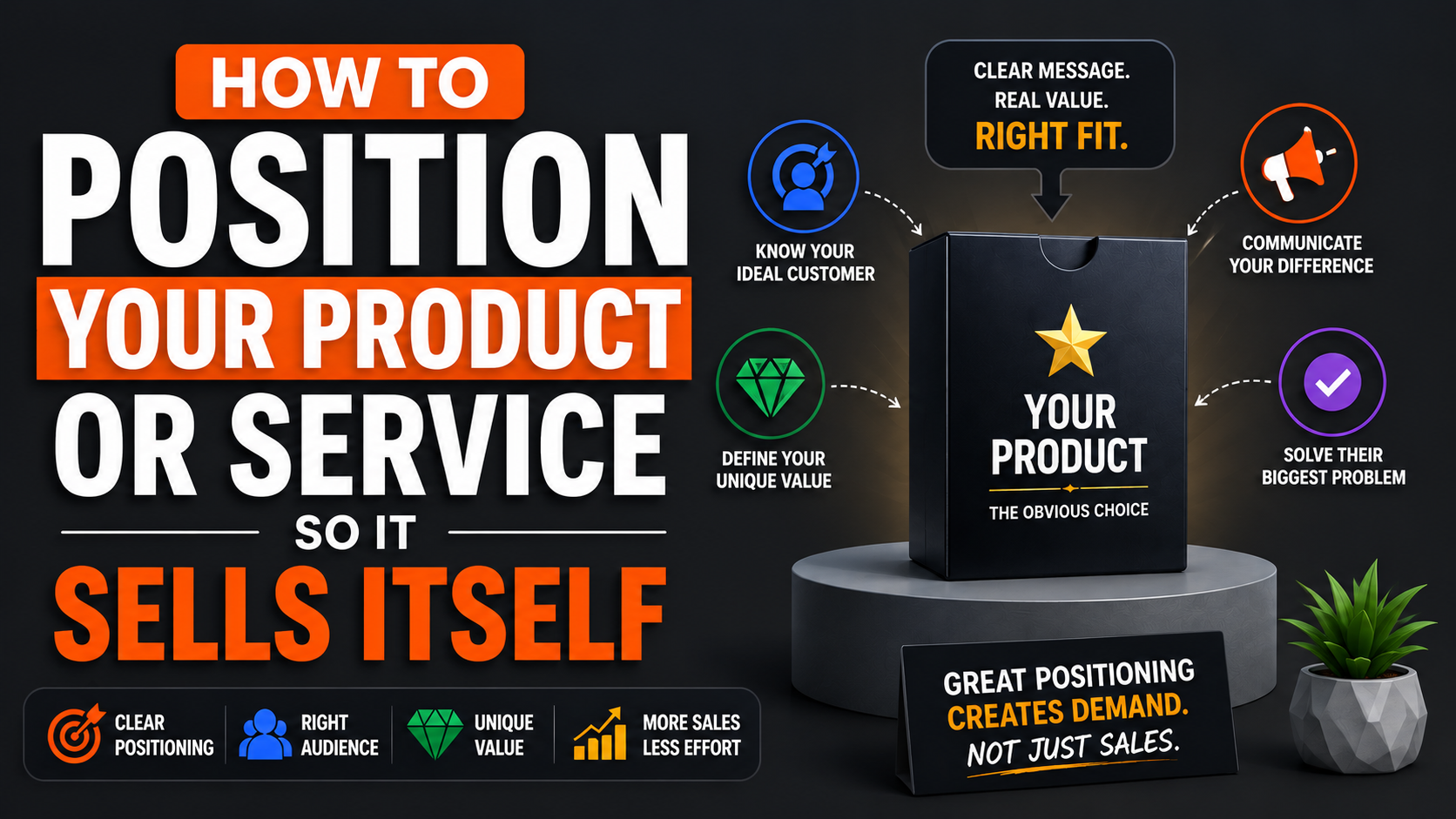
Product positioning is the difference between chasing every sale and having customers convince themselves. In this article, I am going to break down exactly what positioning is, how it differs from branding, and the step-by-step process to position your product or service so it genuinely sells itself. Let’s get started.
What Is Product Positioning?
Product positioning is simply how you define your product or service in the mind of your target customer relative to their needs and the alternatives available to them. It answers one core question: why should this specific person choose this specific product, right now, over everything else they could buy instead?
Positioning is not about the product itself; it is about where that product sits in the customer’s mind. Two businesses can sell the exact same watch, but if one positions it as “an affordable everyday accessory” and the other positions it as “the watch that makes you look successful in every room you enter,” they are effectively selling two completely different products to two completely different buyers.
Product Positioning vs Branding — What Is the Difference?
These two concepts are closely related, and it is easy to confuse them, so let me draw a clear line between them.
Branding is the overall identity of your business, such as your visuals, your tone, your values, and the trust you build over time. It answers “who are you as a business?”
Positioning is specifically about how a particular product or service fits into a customer’s mind relative to their needs and alternatives. It answers “why should I choose this specific product, for this specific problem, right now?”
In essence, branding is the umbrella identity that covers your entire business. Positioning happens underneath that umbrella, at the level of each individual product or service.
You can have a strong, trustworthy brand overall, but still fail to make individual sales if your positioning for a specific product is unclear or generic. This is exactly why I could build brand trust with a customer through consistent presence, but still needed sharp, individual positioning for each specific watch to actually convert that trust into four separate sales.
Why Product Positioning Leads to More Sales
When positioning is clear, the customer does the convincing themselves. They read your description, understand exactly what problem it solves and why it fits their specific situation, and arrive at the buying decision with far less hesitation.
Without clear positioning, even an interested customer is left to guess why your product matters to them specifically, and uncertainty almost always leads to hesitation, comparison shopping, or simply walking away. This is precisely what changed in my own business once I started positioning products deliberately instead of just listing features.
Understand Your Target Audience First
This is where my own sales genuinely began to improve. Before I understood my target audience precisely, my messaging was generic. I was trying to appeal to “anyone who likes watches.” But once I narrowed my understanding to professionals who wanted to look successful without paying luxury prices, every piece of positioning became sharper and more persuasive.
Read, What Is Branding? How to Build a Brand People Trust and Remember
How to apply this: Define your ideal customer’s age range, lifestyle, income level, and, most importantly, the specific outcome or feeling they want from your product. Positioning cannot work in the abstract; it must be built for one specific type of person.
Research Your Competitors Thoroughly
Before I could position my products effectively, I spent real time conducting competitor research by visiting other watch-selling pages online, analysing their pricing, product range, and how they approached customers in their captions and responses. I paid close attention to their marketing techniques — what angles they used, what objections they addressed, and where their positioning felt weak or generic.
This research revealed a clear gap: most competitors were positioning their watches purely on appearance and price, with almost nobody speaking directly to the emotional outcome of confidence and perceived success. That gap became the foundation of my own positioning strategy.
How to apply this: Study five to ten competitors in your niche. Note their pricing, their messaging angle, and any objections or emotional outcomes they are ignoring. The gap you find is often your strongest positioning opportunity.
Find Your Unique Selling Proposition (USP)
Your unique selling proposition is the specific reason your product or service is different from every alternative available to your customer. It answers: What do you offer that nobody else in your space is offering in the same way?
For my watch business, my USP was not simply “affordable watches” because plenty of competitors offered that. My USP became the combination of a genuine trial period before payment, honest communication about any product limitations, and a specific emotional positioning around confidence rather than just appearance.
How to define your USP: Identify the one thing you do differently from every competitor you researched, whether it is your guarantee, your specific niche focus, your customer experience, or a genuine product advantage. State it clearly and repeat it consistently across your messaging.
Define the Problem You Solve and the Value You Provide
Customers do not buy products; they buy solutions to problems and access to specific value. Before writing any positioning copy, get precise about exactly what problem your product solves and what value it delivers.
For a wristwatch, the problem might be: “I want to look successful and put-together in professional settings, but I do not want to spend luxury-brand money to achieve that.” The value delivered is confidence and perceived status at an accessible price point.
How to apply this: Write down the specific problem your product solves for your target customer in one sentence. If you cannot state it clearly and specifically, your positioning will stay vague and vague positioning rarely converts.
Define Your Benefits Clearly and Honestly
Once the problem is clear, your product benefits must directly and honestly address it. Avoid vague, inflated claims. Customers can sense exaggeration, and it damages trust the moment reality falls short of the promise.
Be specific. Instead of saying a watch is “high quality,” describe exactly what that means, like water resistance for daily wear, a warranty period, or a specific material advantage. Clarity and honesty in benefits build far more trust than generic superlatives.
Craft Messaging That Connects With Customers
Positioning messaging is how you communicate your product’s value in a way that genuinely resonates with your specific audience’s language, concerns, and aspirations. This is not just what you say, it is how you say it.
When I shifted my messaging from generic product descriptions to language that spoke directly to how a customer would feel wearing the watch in specific moments—like walking into a meeting, meeting someone new, or closing a deal, the engagement and conversion both improved. The product had not changed. The way I positioned it in conversation had.
How to apply this: Write your messaging as if speaking directly to one specific person, addressing their specific desire or hesitation, rather than writing a generic announcement to a broad audience.
Set a Pricing Strategy That Matches Your Positioning
Your pricing strategy must align with how you have positioned the product. A product positioned as premium and confidence-building cannot be priced at rock-bottom rates without undermining that exact positioning, and a product positioned as accessible and practical should not be priced at a level that contradicts that promise.
For my watches, pricing sat deliberately between rock-bottom competitors and true luxury brands, reinforcing the positioning of “look successful without luxury prices.”
Use Social Proof to Reinforce Your Positioning
This is one of the most powerful tools I used consistently, and it genuinely changed how quickly strangers trusted my positioning. Social proof such as reviews, testimonials, and visible customer satisfaction does the persuasive work that no amount of self-promotion can replicate.
Read, How to Close Sales Deals Faster Without Being Pushy — A Practical Guide
I made it a consistent habit to ask every satisfied customer for a review, and displaying those genuine reviews directly reinforced the positioning I had built — confidence, quality, and honest business practice — now confirmed by someone other than me.
How to apply this: After every sale, ask directly for a review or testimonial. Display these prominently wherever you present your product, since they validate your positioning far more convincingly than your own claims.
Deliver on Your Offer Every Single Time
Positioning promises something specific. If your product or service consistently fails to deliver on that promise, your positioning collapses no matter how well it was originally crafted. Every interaction either reinforces or damages the positioning you have built.
This is exactly why honesty about product limitations, consistent quality, and reliable delivery matter so much. Positioning is not just a message; it is a promise that must be kept.
Common Positioning Mistakes Businesses Make
Trying to appeal to everyone: Positioning that tries to be relevant to every possible customer ends up meaningfully connecting with none of them.
Copying a competitor’s positioning instead of finding a genuine gap: Repeating what everyone else says gives customers no real reason to choose you specifically.
Focusing on features instead of outcomes: Listing specifications without connecting them to the customer’s actual desired feeling or result weakens persuasive power significantly.
Inconsistent messaging across platforms: If your positioning shifts depending on where a customer encounters you, it creates confusion rather than clarity.
Overpromising beyond what the product can deliver: This destroys trust the moment reality falls short, permanently damaging both positioning and reputation.
How to Position Your Product or Service So It Sells Itself
Sometimes existing positioning stops working due to market shifts, competitors changing, or the original angle no longer resonating. Repositioning is the deliberate process of redefining how your product is perceived.
Example — repositioning a wristwatch: If a watch was originally positioned purely on affordability and sales slow as competitors undercut on price, repositioning around durability, a specific guarantee, or an emotional outcome like confidence can restore differentiation without changing the product itself.
Example — repositioning a digital product: If an eBook was originally positioned generically as “learn to make money online” and competition in that exact phrase intensifies, repositioning around a specific narrow audience such as “the AI income guide for complete beginners with zero experience” can restore a clear competitive advantage and boost sales.
Steps to reposition effectively: Revisit your competitor research to identify what has changed in the market. Re-clarify your target audience and confirm it still matches reality. Identify a fresh angle or gap your current positioning is missing. Update your messaging consistently across every platform simultaneously to avoid confusing existing customers.
Frequently Asked Questions
How is positioning different from marketing?
Marketing is the broader activity of promoting and selling your product through various channels. Positioning is the specific strategic decision about how your product is perceived relative to customer needs and alternatives. Marketing then communicates that positioning to the right audience.
Can a product have more than one positioning?
Generally, a single product should maintain one clear, consistent positioning to avoid confusing customers. However, businesses selling multiple products can position each one distinctly, as long as the overall brand identity remains consistent across all of them.
How often should I revisit my product positioning?
Review your positioning whenever you notice declining conversion, increased competition, or a shift in your target audience’s needs. Remember that positioning is not permanent. It should evolve as your market and understanding of your customer develop.
If this article was helpful, share it with your friends and follow me on Facebook, X (formerly Twitter), and YouTube
Leave a Reply