
When I started my watch and jewelry business, I made a costly mistake. I jumped straight into running Facebook ads before I had built anything people could recognize or trust. No consistent visuals, no real story, no proof I was legitimate. The result? Messages poured in with many people asking questions, showing interest, but almost zero conversions.
Looking back, I now know the reason. Nobody hands their money to a stranger who looks like they could disappear tomorrow. I had a product, but I did not have a brand.
That expensive lesson taught me something every business owner eventually learns the hard way: people do not buy from businesses, they buy from brands they trust. And in this article, we will break down exactly what branding is, why it matters for sales, and how to build one, even if you are starting from nothing, like I once was.
What Is Branding?
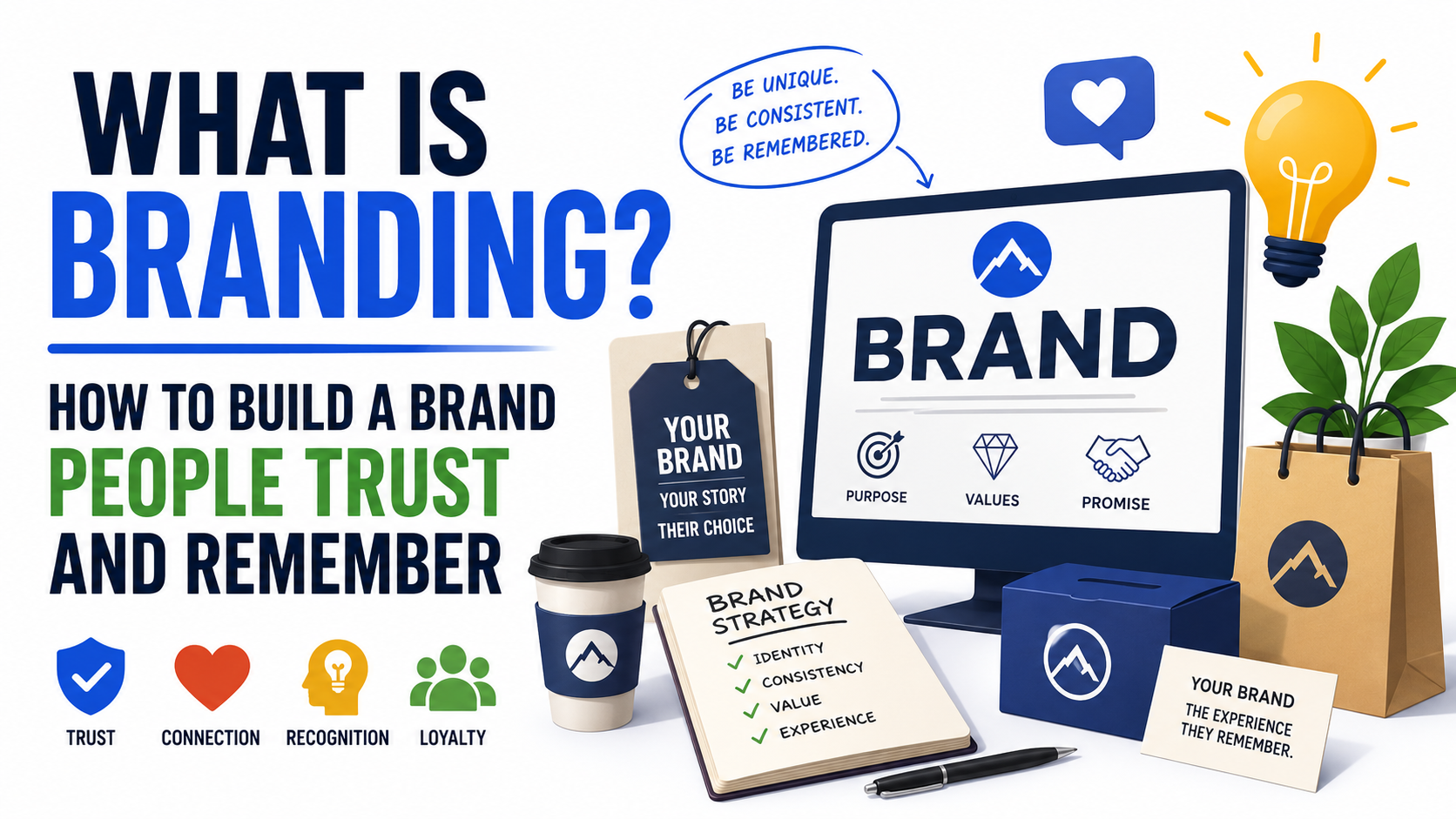
Branding is the complete identity a business builds in the mind of its audience, like how you look, how you sound, what you stand for, and most importantly, how people feel when they interact with you. It is not just a logo or a color scheme. Branding is the sum of every impression a customer forms about you, whether from your website, your social media posts, your product packaging, or the way you respond to a complaint.
A strong brand identity answers three questions instantly in a customer’s mind: who are you, what do you offer, and can I trust you with my money? When I skipped this step and went straight to ads, my potential customers could not answer any of these questions, so they hesitated, asked endless questions, and left without buying.
Why Branding Directly Affects Sales
This is not just a design exercise; branding and sales are directly connected. A recognizable, trustworthy brand reduces the hesitation a stranger feels before buying. It shortens the distance between “I saw your ad” and “I am ready to pay.”
Without a brand, every sale requires the customer to overcome doubt from zero. But with a strong brand, that doubt is already partially resolved before the conversation even starts because they have seen you before, recognized your colors, read your story, or noticed a friend engaging with your content.
Know Your Audience Before You Build Anything
This is the step I skipped entirely in my own business, and it cost me. Before choosing a single color, writing a tagline, or designing a logo, you need absolute clarity on who your audience is, their age range, their taste, their price sensitivity, and what actually matters to them when they buy.
Read, How to Market Smarter, Not Louder: 6 Tips That Actually Drive Sales
When I eventually went back and studied my own customers properly, I realized my visual identity, tone, and even my product photography needed to speak to professionals who wanted to look successful without overspending, not to luxury buyers, and not to bargain hunters. Every branding decision after that point became easier because I finally knew exactly who I was designing for.
How to apply this: Before building your brand, write down exactly who your ideal customer is, their age, their lifestyle, and their biggest hesitation about buying from a new business. Every branding decision should serve that specific person.
Build a Memorable Brand Identity
Once you know your audience, the next step is creating a brand identity that people can instantly recognize wherever they encounter you.
Consistent colors and visuals: Choose two or three core colors and use them everywhere, like your website, your social media graphics, and your product packaging. Consistency is what allows someone to recognize your brand even before reading your name.
A memorable website URL or handle: Your domain name and social media handles should match as closely as possible across every platform. A customer searching for you should find the same name everywhere, not a confusing mix of different usernames.
A recognizable logo: It does not need to be expensive or complicated. It needs to be simple enough to recognize instantly, even at a small size on a phone screen.
A consistent tone of voice: Whether your captions are playful, professional, or personal, keep that tone consistent across every post and message. Customers develop familiarity with how you “sound,” not just how you look.
I learned this lesson slowly. My early content had no consistent look or voice, which meant even repeat visitors did not always recognize that two different posts came from the same business.
Build Trust: The Most Important Branding Asset
Here is the truth I discovered directly from my failed early campaigns: people do not buy from brands they do not trust, no matter how good the product is or how attractive the price looks.
Be honest about your product, including its flaws: If a watch I sold had a minor issue —like the chronograph function not working perfectly, I learned to say so up front rather than let the customer discover it later. This single habit changed how customers responded to me. Honesty about limitations builds more trust than pretending everything is flawless.
Write accurate, non-exaggerated product descriptions: Overselling a product creates a gap between expectation and reality, and that gap is where trust breaks and refund requests begin.
Offer guarantees and clear return policies: A visible, specific guarantee tells a hesitant buyer that you are confident enough in your product to back it up.
How to apply this: Before publishing any product description or sales page, ask yourself honestly, “Am I describing this accurately, or am I describing the version I wish it were?
Build Awareness Consistently
A brand nobody has heard of cannot be trusted, simply because trust requires familiarity. Brand awareness is built through consistent, repeated visibility, not a single viral post, but steady presence over time.
Post consistently across your chosen platforms. Show your product in different contexts. Share behind-the-scenes content that makes your business feel real and human, not just a page selling things. The businesses that build the strongest brand awareness are rarely the loudest; they are the most consistent.
Build Loyalty Through Small, Generous Gestures
Trust gets someone to buy once. Brand loyalty is what brings them back and gets them to tell others about you.
Free delivery removes a final point of friction and signals generosity.
Payment on delivery, where feasible, tells nervous first-time buyers that you are confident enough in your product that you will let them pay only once they have it in hand.
Small free gifts such as a cleaning cloth with a watch, a handwritten thank-you note, a small bonus item create a disproportionately positive emotional response relative to their cost. Customers remember businesses that surprised them with generosity far longer than businesses that simply delivered exactly what was paid for.
These small gestures cost little but build the kind of customer loyalty that turns one-time buyers into repeat customers and unofficial referral sources.
Common Branding Mistakes Businesses Make
Rushing to advertise before building trust: This was my exact mistake, running ads before establishing any recognizable, trustworthy identity. Traffic without trust rarely converts.
Read, Relationship Selling: How to Build Trust That Turns Prospects Into Buyers
Inconsistent visuals across platforms: Different colors, different logos, different tones on different platforms confuse potential customers about whether they are even looking at the same business.
Overpromising in marketing copy: Exaggerated claims generate short-term clicks but long-term distrust once the product fails to match the description.
Ignoring customer complaints publicly: How a business responds to a visible complaint says more about its trustworthiness than any amount of polished marketing.
Copying competitors instead of building a distinct identity: A brand that looks like everyone else in its niche gives customers no real reason to remember or choose it specifically.
Neglecting the “why” behind the business: Customers connect with brands that stand for something beyond just selling a product. Even a simple, honest personal story creates more connection than generic corporate messaging.
What Top Brands Get Right
Looking at globally recognized brands reveals the same principles at a larger scale.
Nike does not primarily sell shoes; it sells the identity of the achiever, reinforced consistently through its “Just Do It” messaging and athlete storytelling across every single touchpoint.
Coca-Cola has maintained the same red and white visual identity for over a century, making it one of the most instantly recognizable brands on the planet without needing to say a single word.
Apple builds its entire brand around simplicity and premium trust — clean design, consistent messaging, and a product experience that reinforces the brand promise at every single interaction.
Airbnb shifted its branding from simply “renting a room” to “belonging anywhere,” giving the brand an emotional identity far beyond its functional service.
None of these brands succeeded through logos alone. They succeeded because every element, such as visuals, tone, promise, and consistency, worked together to build lasting recognition and trust.
How to Build a Brand That Boosts Sales
Step 1 — Define your audience precisely: Know exactly who you are building for before making any design or messaging decisions.
Step 2 — Choose your consistent visual identity: Lock in your colors, logo, and overall look, then apply them everywhere without variation.
Step 3 — Match your username and domain across platforms: Make yourself easy to find and instantly recognizable by name.
Step 4 — Write honest, accurate product and service descriptions: Never let marketing copy promise more than reality delivers.
Step 5 — Show up consistently: Post regularly, using the same tone and visual identity, until your presence becomes familiar rather than occasional.
Step 6 — Add small trust signals: Guarantees, clear return policies, and transparent communication about any product limitations.
Step 7 — Add small loyalty-building gestures: Free delivery, payment on delivery where possible, and small unexpected gifts.
Step 8 — Only then, introduce paid advertising: Once your brand identity, trust signals, and consistent presence are in place, advertising becomes dramatically more effective because you are no longer asking strangers to trust a stranger. You are inviting already-warm visitors to buy from a business that already feels familiar.
This exact sequence — build the brand first, advertise second — is the single biggest change I made after my early failed campaign. The same product, the same audience, and the same ad budget produced completely different results once trust was established before the ad ever ran.
Frequently Asked Questions
Do I need a big budget to build a strong brand?
No. Consistency matters far more than budget. A simple, consistent color scheme and honest messaging built for free using tools like Canva can build more trust than an expensive, inconsistent brand identity.
How long does it take to build brand trust?
There is no fixed timeline, but consistent visibility over weeks and months, combined with honest communication and small trust-building gestures, builds recognition faster than most beginners expect. My own shift happened within a few months once I stopped rushing straight to ads.
Should I build my brand before or after launching my product?
Ideally, build the foundation for your visual identity, audience clarity, and tone before your first launch. However, if you are already selling, it is never too late to introduce consistency and trust-building elements, exactly as I did after my failed early campaign.
If this article was helpful, share it with your friends and follow me on Facebook, X (formerly Twitter), and YouTube
Leave a Reply