
When I started selling watches online, I knew the biggest barrier was not price or design; it was trust. So I made an unusual offer: customers could test the watch for three days and pay only after they were satisfied. No upfront payment. No risk on their side. Just genuine confidence in my product, backed by my willingness to prove it.
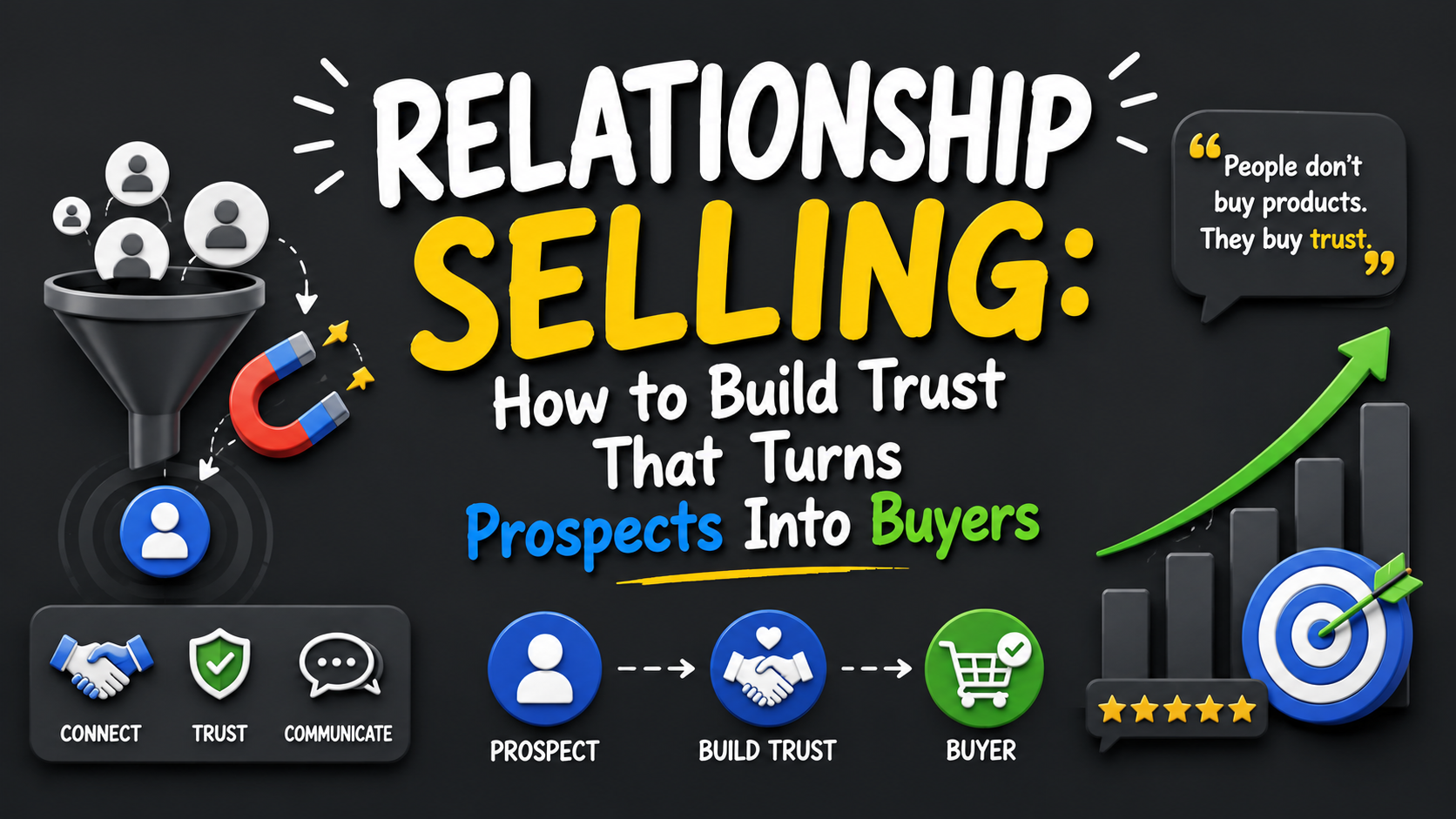
That single decision changed everything. Sales increased because the offer itself communicated something most sellers never say out loud: “I am confident enough in what I am selling that I will let you prove it before you commit.” This is the foundation of relationship selling, building genuine trust that converts strangers into buyers and buyers into repeat customers.
In this article, I will walk you through how to build that trust.
How to Build Trust That Turns Prospects Into Buyers
1. Offer a Risk-Free Trial or Pay-After-Delivery Option
One of the most effective trust-building strategies in sales is removing financial risk entirely from the buyer’s side. Allowing a customer to try your product before paying or offering payment on delivery eliminates the single biggest hesitation most buyers feel: “What if this is not as good as it sounds?”
How to offer this in your business: If you sell physical products, offer a short trial period (3 to 7 days) before payment is required, particularly for higher-priced items where hesitation is strongest. If you run a digital business, offer a free trial period, a sample chapter, or a money-back guarantee within a defined window.
This single strategy answers one of the most searched questions in sales: how to build customer trust without discounting your price?
2. Provide a Clear Guarantee or Return Policy
A money-back guarantee or clear return policy signals confidence in your product and removes the psychological barrier that stops hesitant buyers from completing a purchase.
How to communicate this clearly: State your guarantee in plain language on your sales page like: “If this product does not work as described within 14 days, return it for a full refund, no questions asked.” Avoid vague language like “satisfaction guaranteed” without specific terms, since specificity builds more trust than generic reassurance.
For watches specifically, I offer a repair or replacement option if any function, like the chronograph, stops working within an agreed period. This single guarantee answers the searched question of how to offer a product guarantee that builds customer confidence.
3. Be Completely Honest About Product Limitations
Honesty about what your product can and cannot do is one of the most underrated trust-building strategies in business. If a function is not working perfectly, say so before the customer discovers it themselves.
Example: When I sell a watch, I clearly state whether the chronograph function is fully operational or has a minor issue. If there is any problem, I tell the buyer upfront and offer to have it evaluated or repaired if it develops further issues after purchase.
This directly answers a common search query: how to be transparent with customers about product defects, and it consistently produces stronger long-term customer loyalty than overselling a flawless product that later disappoints.
4. Ensure Consistency Between Your Sales Page and the Actual Product
Nothing destroys trust faster than a mismatch between what a sales page promises and what the customer actually receives. If you are selling an eBook or online course, what is described on your sales page should match exactly what is inside. No exaggeration, no missing modules, no bait-and-switch.
How to apply this: Before publishing any sales page, read it as if you were the buyer receiving the actual product. Does every claim hold up? If your sales page says “12 detailed video modules,” your course should contain exactly that, not eight modules with padding.
This builds the foundation for answering how to write an honest sales page that builds trust, one of the most valuable long-term reputation assets any business can build.
5. Offer a Free Guide or Resource Before Asking for a Sale
Giving away genuine value before requesting payment is one of the most effective relationship selling techniques because it shifts the relationship from “seller trying to extract money” to “expert offering help.”
How to do this: Create a free checklist, short guide, or sample resource related to your paid product and offer it without requiring an immediate purchase. For example, if you sell a course on freelancing, offer a free one-page “first client checklist” in exchange for an email address.
Read, How to Identify High-Quality Leads That Convert to Sales in 2026
This approach answers the search query, ” How to use free resources to build customer trust,” and it consistently produces warmer, more receptive leads than cold sales pitches.
6. Post Consistently to Establish Authority in Your Niche
Trust is built cumulatively, not in a single interaction. Consistent posting, like sharing insights, behind-the-scenes content, and genuine expertise in your niche, signals to potential customers that you know what you are doing long before they ever consider buying from you.
How to apply this: Post at least three times per week with content that demonstrates real knowledge, such as tips, mistakes to avoid, and behind-the-scenes process content rather than only posting promotional sales content. Audiences trust accounts that teach consistently far more than accounts that only sell.
This directly answers the question of how to build authority in your niche to increase sales, a search query with significant relevance to anyone building a personal brand or small business online.
7. Provide Excellent Packaging and Presentation
For physical products, the unboxing experience itself communicates quality and care before the customer even uses the product. Poor packaging creates doubt about product quality, even if the actual item is excellent.
How to improve this: Invest in clean, branded packaging that protects the product and reflects the quality you are promising. A small thank-you note inside the package adds a personal touch that customers consistently remember and mention in reviews.
This answers a frequently searched query: how does packaging affect customer trust and repeat purchases, and it remains one of the most cost-effective trust signals available to small businesses.
8. Offer Free Delivery or Local Payment-on-Delivery Options
Removing logistical friction builds trust just as effectively as removing financial risk. Free delivery signals generosity and confidence, while payment on delivery for local customers removes the final hesitation before a purchase decision.
How to implement this: If your margins allow it, offer free delivery within a defined local radius, and clearly state this on your sales page as a value-add rather than burying it in fine print. For customers within a reasonable delivery distance, offering payment on delivery removes nearly all remaining purchase hesitation.
This answers the searched question of how to reduce purchase hesitation with delivery options.
9. Include Free Gifts to Increase Memorability and Loyalty
A small, unexpected free gift included with a purchase creates a disproportionately positive emotional response relative to its actual cost, and customers remember brands that surprise them this way far longer than brands that simply deliver exactly what was paid for.
Example of how to offer a gift: Include a small complementary item with relevant value, like a watch cleaning cloth with a wristwatch purchase, a bonus mini-guide with a digital product, a personalised thank-you note with a handwritten message, a perfume or jewellery. The gift does not need to be expensive; it needs to feel intentional and personal.
This directly answers how to thank customers in a way that builds long-term loyalty, a small gesture that consistently produces outsized reputation benefits relative to its cost.
10. Respond Quickly and Personally to Customer Questions
Response speed and tone communicate how much you value a potential customer before they have spent a single dollar with you. Slow, generic, or robotic responses erode trust, while fast, personal responses build it rapidly.
How to apply this: Respond to enquiries within a few hours wherever possible, and avoid copy-paste responses that feel impersonal. Address the customer by name and reference their specific question directly rather than sending a generic templated reply.
This answers the search query how response time affects customer trust in online sales, and it is one of the simplest, lowest-cost trust-building strategies available to any business regardless of size.
11. Show Real Customer Reviews and Testimonials
Genuine social proof remains one of the most powerful trust signals in any sales process. A potential buyer who sees real people with real experiences vouching for your product overcomes hesitation faster than any sales copy you could write yourself.
How to collect these effectively: Ask satisfied customers directly for a review immediately after a positive experience, when their enthusiasm is freshest. Display these prominently on your sales page, ideally with the customer’s name and, where possible, a photo for added authenticity.
This answers the question of how to use customer testimonials to build trust and increase sales, one of the most consistently searched topics in ecommerce and digital product marketing.
Why Relationship Selling Outperforms Transactional Selling Long-Term
Transactional selling focuses purely on closing the immediate sale. Relationship selling focuses on building the kind of trust that produces repeat purchases, referrals, and long-term customer loyalty, assets that compound over time in ways a single sale never can.
My three-day trial offer for watches was never just about that individual sale. It was about demonstrating, through action rather than words, that my business operates with integrity. That single decision built a reputation that now generates referrals and repeat customers without any additional advertising spend.
Frequently Asked Questions
How long should a product trial period last to build trust without hurting cash flow?
Three to seven days is typically sufficient to demonstrate product quality while minimising the cash flow impact on your business. Adjust based on your specific product type and how quickly customers can reasonably evaluate its value.
Does offering free gifts actually increase sales, or just add unnecessary cost?
When chosen thoughtfully and kept low-cost relative to the purchase price, free gifts consistently increase customer satisfaction, reviews, and referral rates, generating returns that typically outweigh the small additional cost.
What is the difference between relationship selling and traditional sales tactics?
Traditional sales tactics prioritise closing the immediate transaction, often through urgency or pressure. Relationship selling prioritises building genuine trust and long-term value, which produces slower initial conversions but significantly stronger customer loyalty and repeat business over time.
Follow me on Facebook, X (formerly Twitter), and YouTube
Leave a Reply