
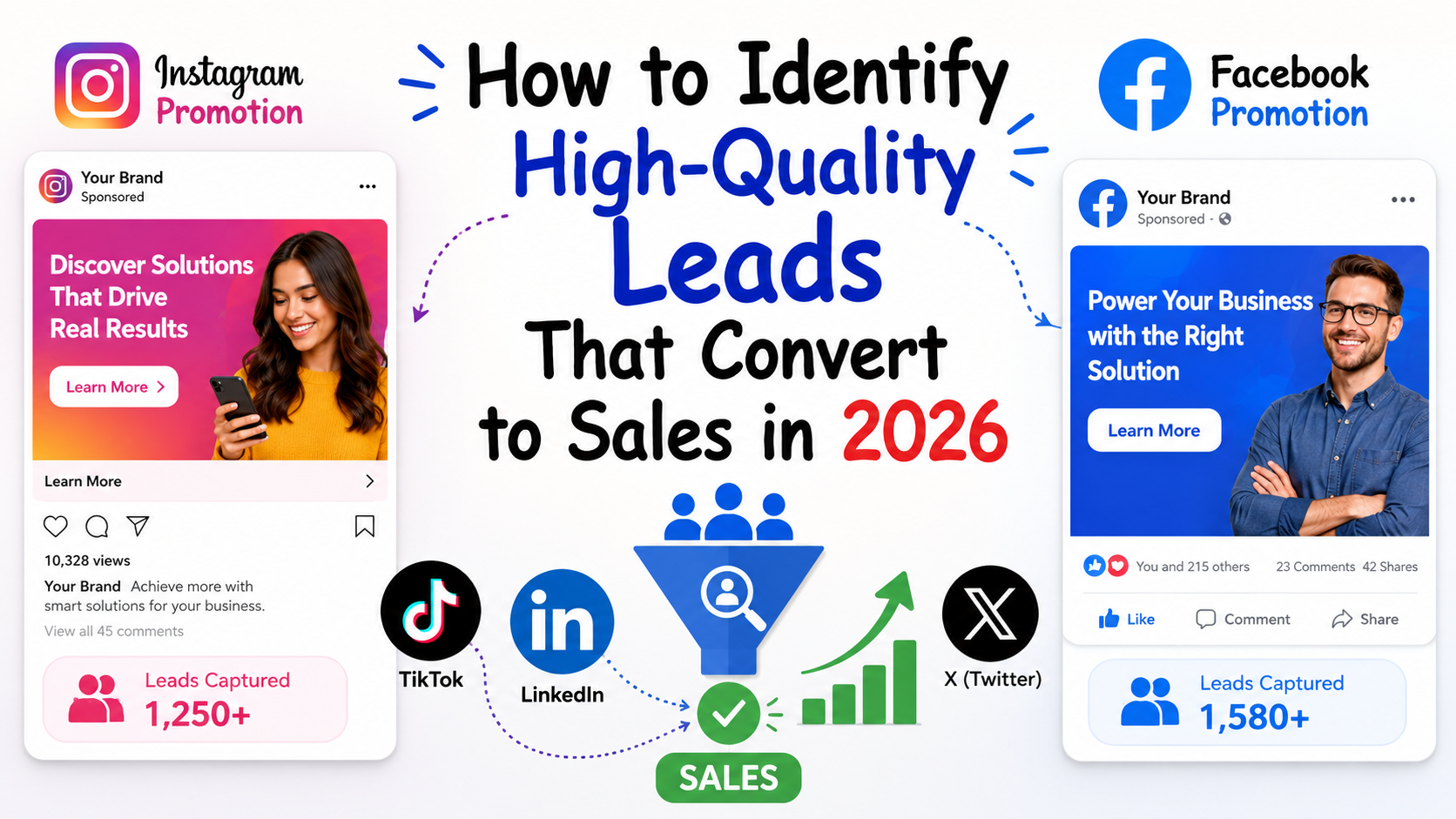
I ran a Facebook ad for my wristwatch brand and got 54 people reaching out to ask questions, request more photos, and engage in conversation. Not a single one of them bought. 54 conversations. Zero sales. That experience forced me to stop assuming that contact equals interest, and start genuinely understanding what separates a lead who will actually buy from one who is simply curious.
Most businesses focus enormous energy on generating leads without spending enough time understanding lead quality. After analysing that failed campaign, I identified several factors that actually predict whether a business lead is genuinely high-quality or just noise. And in this article, I am going to walk you through exactly what I found out and how to identify leads that convert into sales.
What Makes a Lead “High-Quality” in the First Place
A high-quality lead is not simply someone who clicks your ad or sends a message. It is someone who matches three conditions simultaneously: they have a genuine need or desire for what you sell, they have the financial means to buy it, and they are close enough to a buying decision that your outreach can realistically convert them within a reasonable timeframe.
A lead missing any one of these three conditions will waste your time, regardless of how engaged they seem in conversation. This is exactly what happened with my 54 contacts. Many were curious, some were price-checking competitors, and others simply enjoyed the conversation without any real buying intent. But, how do you filter these numbers and know quality leads?
How to Identify High-Quality Leads That Convert to Sales in 2026
1. Analyse Your Traffic Source Before Anything Else
The very first thing I went back to examine after my failed campaign was where my traffic was actually coming from. Not every visitor arriving through an ad has the same level of buying intent, even if they technically clicked the same advertisement.
Cold traffic: People seeing your brand for the first time require significantly more trust-building before converting.
Warm traffic: People who have engaged with your content before, visited your website previously, or follow you on social media already carry a level of familiarity that moves them closer to a buying decision.
When I dug into my own ad data, I noticed the majority of my 54 contacts came from a broad cold audience with no prior interaction with my brand. They were curious about a product they had never seen before, not actively shopping for a watch that day.
What to do: Segment your traffic sources clearly in your ad platform reporting. Compare conversion rates between cold, warm, and retargeted audiences separately rather than looking at overall campaign performance as one number. This alone often reveals where your real opportunity is hiding.
2. Examine Who You Are Actually Targeting
Audience targeting determines who sees your content in the first place, and getting this wrong means you are essentially fishing in the wrong pond, no matter how good your bait is.
I reviewed my targeting settings honestly and realised I had cast too wide a net, targeting a broad interest category related to fashion accessories rather than narrowing toward people who had demonstrated genuine purchase behaviour around watches or premium accessories specifically.
What to do: Narrow your targeting toward specific behavioural signals rather than broad interest categories alone. Platforms like Meta allow you to target people who have engaged with similar products, visited competitor pages, or shown purchase intent signals. These audiences consistently convert better than broad demographic or interest-based targeting alone.
3. Study the Behaviour of People Who Contact You
Not all engagement signals the same level of intent, and learning to read the difference is a skill that directly improves your lead qualification process.
When I went back through my 54 conversations, clear patterns emerged. Some people asked detailed questions about price, payment methods, and delivery. These were genuine buying signals I had under-prioritised in the moment. Others asked vague questions like “is this original watch?” or “I prefer bold watch?” without ever progressing toward a purchase conversation, regardless of how I answered.
What to do: Categorise incoming leads by question type. Questions about price, availability, payment options, and delivery timelines signal genuine purchase intent. Questions that are purely informational or comparative, without any forward movement toward a transaction, often indicate browsing behaviour rather than buying behaviour.
4. Pay Attention to Social Media Engagement Behaviour
The way someone interacts with your content before ever contacting you reveals a great deal about their position in the buying journey.
Someone who likes a single post is at a completely different stage than someone who comments asking specific product questions, saves your post for later reference, or shares it with a friend, tagging them directly. These behaviours represent meaningfully different levels of intent, even though most businesses treat all engagement as equally valuable.
What to do: Pay closer attention to comments and saves rather than just likes when evaluating which posts are generating genuine interest. A post with fewer likes but more specific product-related comments often contains higher-quality leads than a post with broad, surface-level engagement.
5. Match Your Platform to the Type of Lead You Need
This was one of the most important realisations from analysing my own campaign. Different social media platforms naturally attract fundamentally different types of leads, and matching your product to the right platform matters enormously. For example;
LinkedIn is built around professional networking and business decision-making. If you are selling jewellery, fashion accessories, or lifestyle products, you will struggle to find genuine consumer buying intent here, because the platform’s entire context is professional rather than personal shopping behaviour. LinkedIn excels in B2B services, professional tools, consulting, and business software.
Read, How to Use Local Influencer Partnerships to Drive Sales (Step-by-Step Guide)
Instagram is naturally aligned with visual, lifestyle-driven products. If you are selling jewellery, fashion, beauty products, or home decor, this is where your audience is already primed to discover and desire products visually, which is exactly the context I should have leaned into more heavily for my watch brand.
TikTok attracts a younger, discovery-driven audience that responds strongly to demonstration-style content and trends. Products that benefit from being shown in action, like beauty tools, gadgets, fashion try-ons, perform particularly well here.
Facebook still holds strong relevance for slightly older demographics and local community-based selling, particularly for products or services tied to specific geographic regions.
X (formerly Twitter) tends to attract audiences interested in technology, finance, business, and current events. It is also strong for software, fintech products, and thought-leadership-driven sales rather than consumer lifestyle products.
What to do: Before running any campaign, honestly assess whether your product category naturally fits the platform’s dominant audience behaviour. A jewellery brand searching for leads on LinkedIn is working against the platform’s core context, while the same brand on Instagram is working with it.
6. Look for Buying Signals, Not Just Interest Signals
There is a meaningful difference between someone expressing general interest and someone displaying an actual buying signal. Interest signals include things like asking general questions or expressing admiration for a product. Buying signals include asking about specific delivery timelines, requesting payment information, comparing your product directly against a specific alternative they are deciding between, or asking about return policies.
What to do: Train yourself or your sales team to recognise this distinction immediately in conversation. When you notice a buying signal, respond with urgency and a clear next step. When you notice only interest signals, focus on building trust and providing more value before pushing toward a sale.
7. Consider the Timing of Engagement
The time when someone engages with your content also reveals something about lead quality. A person who responds within minutes of a post going live often has a different level of attentiveness and interest than someone who engages days later after scrolling through old content.
What to do: Pay attention to response speed and timing patterns. Leads who engage quickly and continue the conversation promptly tend to convert at higher rates than those who engage sporadically over extended periods, since rapid engagement often reflects genuine present-moment interest rather than passive curiosity.
How I Would Approach This Differently Today
If I were running that same wristwatch campaign again, I would narrow my targeting significantly, shift more budget toward Instagram given the visual nature of the product, build in specific buying-signal questions into my automated responses to quickly separate serious buyers from casual browsers, and pay far closer attention to comment and save behaviour rather than treating every contact as equally valuable.
The lesson from those 54 conversations was not that my product or pricing was wrong; it was that I had not yet learned to distinguish genuine buying intent from polite curiosity, and that distinction changes everything about how you should spend your time and follow-up energy.
Frequently Asked Questions
What is the difference between a lead and a high-quality lead?
A lead is simply anyone who has shown some form of engagement or contact with your business. A high-quality lead specifically has a genuine need, financial capacity, and proximity to an actual buying decision. All three conditions matter simultaneously.
How do I know if my traffic source is generating low-quality leads?
Compare conversion rates across different traffic sources separately rather than looking at your overall campaign performance as a single number. If cold, untargeted traffic consistently underperforms compared to warm or retargeted traffic, your traffic source is likely the issue rather than your product or pricing.
Should I target multiple social media platforms at once?
Only after confirming which platform naturally aligns with your specific product category. Spreading your small budget across platforms that do not match your audience’s natural behaviour typically produces worse results than concentrating effort on the one or two platforms where your ideal customer already spends meaningful time.
Leave a Reply