
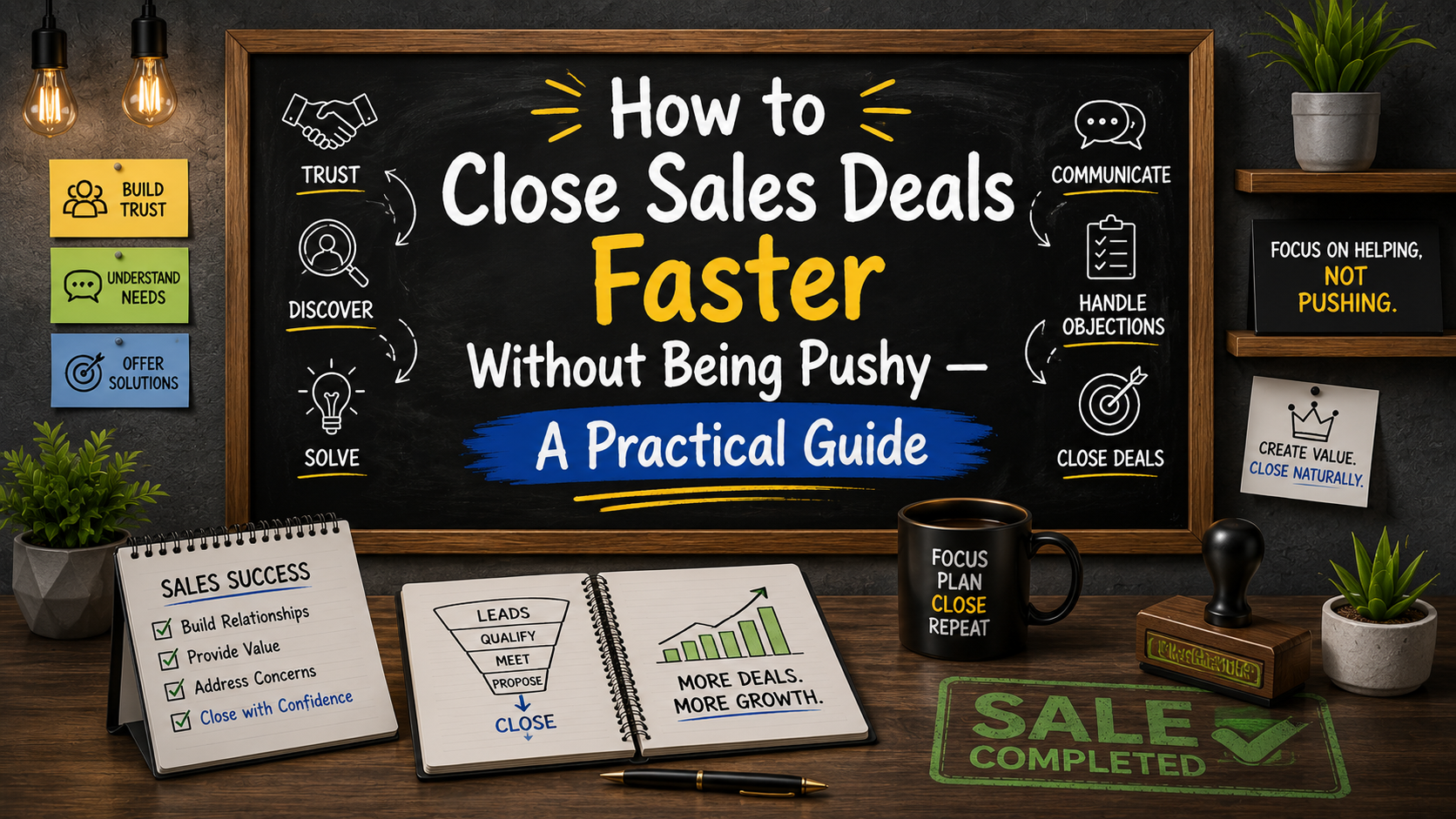
Someone messaged me about my watches, asked every question I could imagine, looked at samples, compared prices and then went quiet. I had done everything right up to that point. The conversation was warm, the interest was genuine, but somehow the actual purchase never happened. That gap between “I want this” and “I have paid for this” is where most sales actually die.
Closing a sales deal is a completely different skill from convincing someone your product is worth buying. By the time you reach the closing stage, the buyer has already agreed mentally. Your job now is simply to remove every remaining friction point between that agreement and the actual transaction. That’s what we are going to be looking into in this article. How to close sales deals faster without being pushy.
What Does It Mean to Close a Sales Deal?
Closing a sale means guiding an already-convinced buyer through the final action of completing a purchase, whether that is paying through a link, confirming an order, or signing up for a service. This is distinct from negotiation or persuasion, which happen earlier in the process. At the closing stage, the buyer has already decided “yes” in their mind. Your job is to make saying yes in action as effortless as possible.
Many sales are lost not because the buyer changed their mind, but because the closing process introduced unnecessary friction, delay, or doubt at the exact moment they were ready to act. Now, let’s see how you can close those sales deals faster without losing the customer.
How to Close Sales Deals Faster Without Being Pushy
1. Make the Payment or Purchase Process Effortless
The single biggest reason warm leads go cold is friction at the point of payment. If a buyer has to search for your payment link, ask how to pay, or navigate multiple steps to complete a purchase, you risk losing momentum.
How to apply this: As soon as someone confirms they want to buy, send the payment link or checkout link immediately, without delay. For closing a sales deal for a digital product, this means having your Selar or Gumroad link ready to send the instant interest is confirmed. For ecommerce, ensure your checkout process requires the fewest possible steps.
2. Use a Clear, Direct Closing Statement
Many sellers hesitate at the final moment, fearing they will sound pushy. Ironically, this hesitation often creates more discomfort than a clear, confident closing statement would.
How to apply this: Once you sense genuine buying intent, say something direct: “Great, here’s the payment link. Once that’s done, I’ll get your order processed right away.” This is not pushy; it is simply guiding someone toward the action they have already decided to take.
This directly addresses how to close a sales deal for ecommerce without sounding aggressive.
3. Remove Any Remaining Uncertainty Before Asking for Payment
Sometimes a buyer goes quiet not because they changed their mind, but because one small unanswered question is sitting unresolved in their head, such as delivery time, return policy, or payment method.
How to apply this: Before sending a payment link, briefly confirm: “Just to recap, delivery takes 2 days, and if anything is wrong with the product on arrival, you can return it within 7 days. Does that all sound good?” This closes any small remaining gap in confidence before asking for the transaction itself.
4. Use Assumptive Closing Language
Assumptive closing means speaking as if the sale is already happening, rather than asking permission to proceed. This subtle shift in language often moves a hesitant buyer toward action without any pressure.
How to apply this: Instead of asking “Would you like to go ahead and buy this?”, which invites a no, try “I’ll get this ready for you, just send your delivery address whenever you’re set.” This frames the transaction as already in motion rather than still being decided.
This answers the search query how to use assumptive closing techniques in sales.
5. Offer a Time-Sensitive Reason to Act Now
Genuine urgency, not manufactured scarcity, can be the gentle push that moves someone from “I’ll think about it” to “let me pay now.” This works particularly well when the urgency is real and clearly communicated.
How to apply this: If you have limited stock, a closing price increase, or a genuine deadline, mention it naturally: “Just a heads up, I only have two of these left in this colour.” Avoid fake urgency that buyers can easily detect, as this damages trust permanently.
Read, How to Negotiate Business Contracts Like a Pro (Without Losing the Deal)
This addresses how to close a sale using urgency without being manipulative.
6. Simplify the Decision With a Single Clear Option
When buyers are presented with too many choices at the closing stage, like multiple payment plans, multiple package options, and multiple delivery methods, decision fatigue often causes them to delay rather than choose.
How to apply this: At the point of closing, narrow the decision down to the simplest possible choice. “Based on what you told me, this package fits you best. Here’s the link to get started.” Save additional options for after the initial commitment, not during the close itself.
This answers how to close a sale by simplifying the buying decision.
7. Follow Up Promptly Without Being Aggressive
If a buyer goes quiet after expressing clear interest, a well-timed follow-up can recover the sale, but timing and tone matter enormously.
How to apply this: Wait a reasonable period, like a few hours for digital products, a day or two for higher-consideration purchases. Then send a light, non-pressuring message: “Just checking in. Were you able to look at the payment link? Happy to answer any last questions.” This reopens the conversation without sounding desperate or aggressive.
This directly addresses how to follow up after a sales conversation without being pushy.
8. Close Group-Based Leads With a Clear Call to Action
If you generated leads through a Facebook or Instagram lead ad and added prospects to a WhatsApp or Telegram group, closing within that environment requires a slightly different approach than a one-on-one conversation.
How to apply this: After delivering your value-driven content or explanation within the group, transition clearly into the close: “If you’re ready to get started, here’s the link. Spots are filling up, so grab yours today.” In group settings, social proof from other members purchasing or asking questions publicly often accelerates closing for everyone watching, even silently. So, always ask for social proof from other members who have purchased your digital product.
This answers how to close sales deals from a WhatsApp or Telegram group.
9. Address the Buyer’s Final Hesitation Directly
Sometimes a buyer’s silence is not indecision; it is one specific, unspoken concern. Identifying and naming that concern directly often unlocks the close faster than waiting for them to bring it up themselves.
How to apply this: If you sense hesitation, ask directly: “Is there anything specific holding you back from going ahead with this?” This single question frequently surfaces the real objection, like price, trust, or timing, allowing you to address it immediately rather than losing the sale to unspoken doubt.
This answers how to close a sale when the buyer is hesitant.
10. Close Digital Product and Online Course Sales With Instant Access
For closing a sales deal for an online course or digital product, the immediacy of access itself can be a powerful closing tool. Buyers respond strongly to the promise of instant gratification once payment is made.
How to apply this: Emphasise instant access clearly at the closing moment: “Once you complete payment, you’ll get instant access to the full course — you can start today.” This removes any perception of delay between paying and receiving value, which is often the final hesitation for digital purchases specifically.
How to Close a Sale Without Feeling or Sounding Pushy
The difference between confident closing and pushy closing lies entirely in respecting the buyer’s pace while still providing clear direction. Pushy selling pressures someone who has not yet decided. Confident closing simply removes friction for someone who already has.
If a buyer has asked detailed questions, requested samples, or engaged extensively with your offer, as in the watch example I shared at the start of this article, they have usually already made their decision internally. Your role at that point is not to convince further, but to make acting on that decision as smooth and immediate as possible.
Common Mistakes That Kill Closing Rates
Going silent after sending information: If you have answered every question and shared every sample, but then wait passively for the buyer to initiate payment themselves, you often lose momentum. Guide them directly to the next step instead.
Overcomplicating the payment process: Multiple steps, unclear instructions, or delayed responses to payment-related questions consistently kill sales at the final stage.
Sounding apologetic about asking for payment: Phrases like “Sorry to bother you, but whenever you’re ready…” signal hesitation that buyers pick up on. Confidence at the closing stage is not the same as pressure.
Frequently Asked Questions
How do I close a sale without sounding desperate?
Focus on guiding rather than pleading. Clear, direct language like “here’s the link to get started” communicates confidence, while repeated follow-ups within short timeframes can come across as desperate. Space out your follow-ups reasonably and keep your tone light.
What should I do if a buyer says they need to think about it?
Ask directly what specifically they need to think about, like price, timing, or trust. This often surfaces the real objection, allowing you to address it rather than simply waiting indefinitely for a response that may never come.
Is urgency manipulative when closing a sale?
Urgency is only manipulative when it is false. Genuine urgency like real limited stock, an actual closing date, or a real price increase is a legitimate and effective closing tool, while fabricated urgency damages long-term trust once discovered.
Leave a Reply