
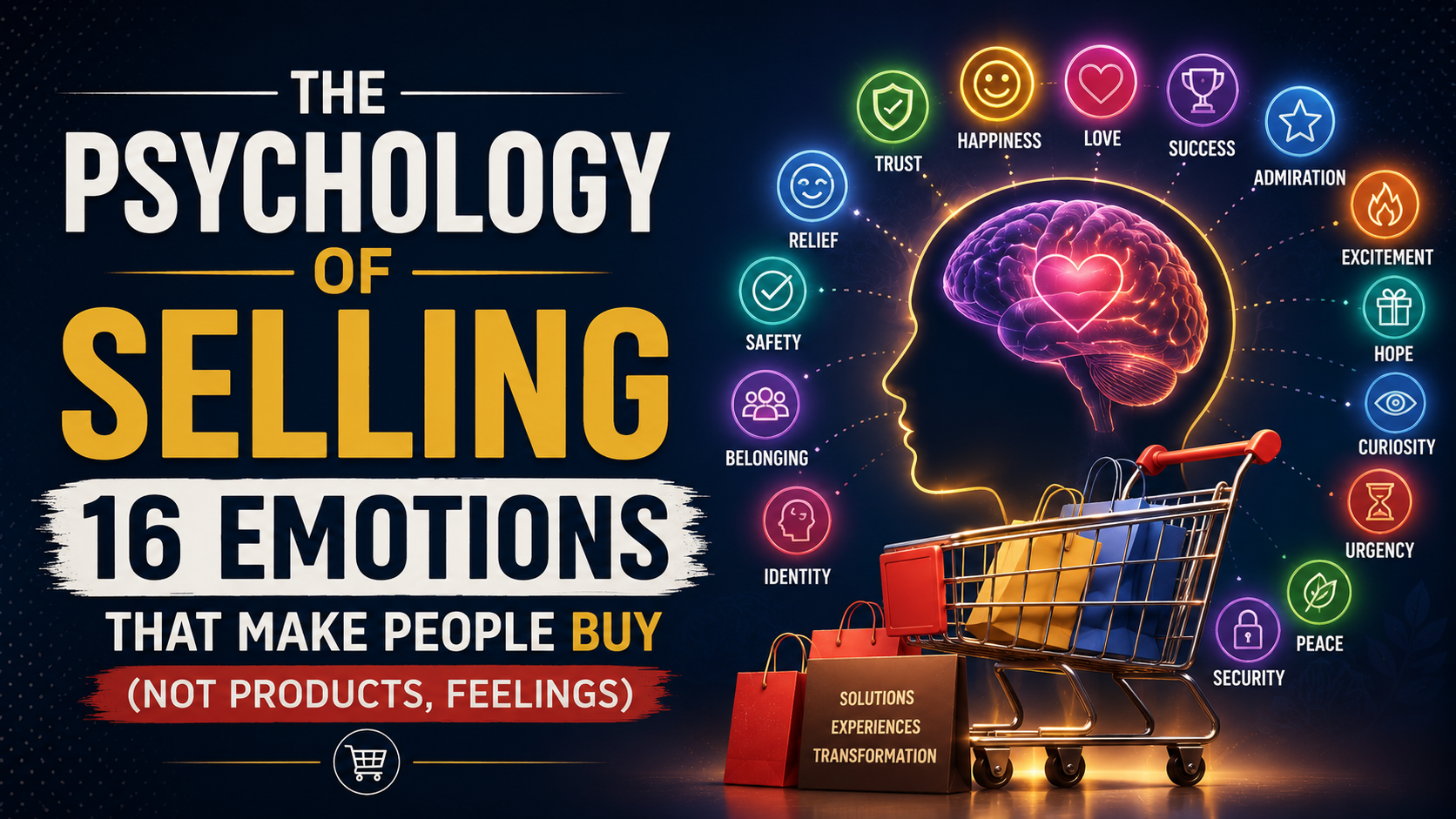
In February 2026, I got 30 leads from a Facebook ad campaign and zero sales. Not one. I had spent my entire ad budget convincing strangers to message me about my watches, and every single conversation died somewhere between “how much is this” and silence. It took me weeks to realise the problem was never the product; it was that I was selling a watch when I should have been selling a feeling.
This single shift changed everything I now understand about the psychology of selling. People do not buy products. They buy what those products make them feel like: confidence, safety, belonging, status, relief. If you want to genuinely understand why people buy, you have to stop thinking about features and start thinking about emotion.
In this article, we are going to look into the 16 emotional triggers that drive almost every purchasing decision, and how to apply them to your own business.
Why Understanding Buyer Psychology Matters More Than Your Product
Before going through the list, understand this core principle: wealth follows value, not luck, and value is almost always emotional, not logical. My wristwatch campaign failed because I was talking about straps and movements when my actual customers wanted to feel successful. Once I understood this, I stopped selling watches and started selling the feeling of walking into a room and having people notice.
This is consumer psychology in its simplest form, which is to solve a deep feeling, not a small surface-level problem, and the sale becomes almost automatic. Now, let’s look at these emotional triggers that make people buy easily.
The Psychology of Selling: 16 Emotions That Make People Buy
1. Selling Beauty (To Women)
Why it works: Beauty creates confidence and perceived value. It is rarely about the product itself. It is about how a woman feels seeing herself differently because of it.
How to apply this: If you are in skincare, fashion, or beauty, your marketing should focus on the transformation in confidence, not the ingredient list. A niche skincare line or a simple “glam filter” content angle taps directly into this emotional driver.
2. Selling Lust (To Men)
Why it works: Attraction is a primal, biological driver that bypasses logical decision-making almost entirely.
How to apply this: Dating platforms, fitness supplements, and grooming products that promise increased attractiveness or confidence consistently outperform those that simply list features. The emotional promise of being noticed is the actual product being sold.
3. Selling Peace (To Parents)
Why it works: Parenthood is chaotic, and a few quiet, uninterrupted minutes feel priceless to an exhausted parent.
How to apply this: Screen-free entertainment kits, automated baby monitors, and any product that offers parents a genuine break, taps directly into this need. The product is secondary. The real sale is silence and a moment to breathe.
4. Selling Dreams (To Kids)
Why it works: A child’s imagination has no limits, and products that let them become the hero of their own story tap into something far deeper than entertainment.
Read, How to Market Smarter, Not Louder: 6 Tips That Actually Drive Sales
How to apply this: Personalised storybooks where the child becomes the main character, or beginner coding games framed as “building your own world,” sell imagination itself and not just a toy.
5. Selling Safety (To the Wealthy)
Why it works: People with significant assets have the most to lose, and protecting what they have built becomes an emotional priority above almost everything else.
How to apply this: High-end home security consulting, private data encryption services, and discreet protective services all sell peace of mind, not just a service. The wealthy do not buy security systems; they buy the feeling of being untouchable.
6. Selling Hope (To the Broke)
Why it works: Financial struggle is exhausting, and people in that position need to genuinely believe a change is coming before they will take any action at all.
How to apply this: Budgeting apps, career coaching, or side hustle starter kits like the one I personally built around AI income succeed not because they promise instant wealth, but because they sell the belief that things can genuinely get better.
7. Selling Youth (To the Old)
Why it works: Nearly everyone fears irrelevance and mortality, and products that promise to slow that feeling down tap into something deeply emotional rather than purely physical.
How to apply this: Anti-ageing wellness retreats, tech support services tailored specifically for seniors, or community programmes designed to keep older adults engaged all sell relevance and vitality, not just a service.
8. Selling Status (To the Young)
Why it works: Younger people are actively building their identity, and they need ways to signal who they are to the world around them.
How to apply this: Limited edition streetwear, exclusive “members-only” community access, or scarcity-driven product drops all sell identity and belonging through status, far more than they sell the actual physical item.
9. Selling Belonging (To the Lonely)
Why it works: Humans are tribal by nature, and isolation feels genuinely painful at a psychological level. Products and communities that offer connection solve something far deeper than boredom.
How to apply this: Niche community subscriptions, hobby-based meetups, or any platform built specifically around shared identity tap directly into this emotional driver. This is exactly why my own AI income WhatsApp groups work better than a generic sales pitch. People stay for the belonging, not just the content.
10. Selling Miracles (To the Sick)
Why it works: Desperation drives action faster than almost any other emotional state, particularly around health.
How to apply this: Holistic health supplements and stress-relief products perform exceptionally well in this space, but this is also where ethical marketing matters most. Sell genuine hope responsibly, never false promises.
11. Selling Fear (To the Healthy)
Why it works: Humans are wired to protect what they currently have, even when nothing is currently wrong.
How to apply this: Preventive health screenings, fitness trackers, and “prepper” style survival gear all sell protection against a future threat, not a current problem. The emotional driver is prevention, not cure.
12. Selling Shortcuts (To the Smart)
Why it works: Smart, busy people value efficiency over effort, and they are often willing to pay a premium to save time rather than money.
How to apply this: AI automation services, executive book summaries, and done-for-you systems all sell time itself. This is exactly the emotional driver behind everything I teach around using AI tools to build income faster than doing everything manually.
13. Selling Validation (To the Insecure)
Why it works: Everyone wants to be told they are right, and content that confirms existing beliefs feels deeply satisfying on an emotional level.
How to apply this: News aggregators that confirm existing biases, or personality tests that flatter the user, tap directly into this need for validation rather than new information.
14. Selling Certainty (To the Doubtful)
Why it works: Doubt is uncomfortable, and structure or routine genuinely reduces anxiety for people who feel uncertain about their decisions.
How to apply this: Daily affirmation apps and structured routine planners sell certainty and capability, framed simply as “you are strong and capable” — a feeling, not a feature.
15. Selling Rebellion (To the Rebellious)
Why it works: Going against the grain feels empowering, especially for people who feel unheard or constrained by mainstream expectations.
Read, How to Close Sales Deals Faster Without Being Pushy — A Practical Guide
How to apply this: “Anti-establishment” clothing brands and alternative media channels succeed by selling identity through rebellion. The product is simply the symbol of a feeling the buyer already wants to express.
16. Selling Time (To Everyone)
Why it works: Time is the one asset nobody can ever earn back, which makes it universally valuable regardless of age, income, or background.
How to apply this: Meal delivery services, house cleaning platforms, and virtual assistant agencies all sell time itself back to the buyer. This single emotional driver applies to literally everyone, which is why time-saving offers consistently convert across almost any audience.
What This Means for Your Marketing
Go back to my February 2026 campaign for a moment. I was selling a watch — straps, movements, water resistance. What I should have been selling was status and confidence, the same emotional drivers listed above. The moment I rewrote my ad copy to focus on how the watch made someone feel rather than what it technically did, conversion rates changed immediately.
This is the entire foundation of emotional marketing: understand the deep feeling behind your product, not just the surface-level problem it solves.
How to Apply This to Your Own Business Today
Look at your own product or service and ask yourself honestly: which of these 16 emotional drivers am I actually selling? If you cannot answer that clearly, your marketing is likely talking about features instead of feelings, exactly the mistake that cost me an entire ad budget with zero return.
Rewrite your next piece of marketing copy around the emotion first, then let the product become the vehicle that delivers it. Solve deep feelings, not small problems, and the sales conversation becomes dramatically easier.
Frequently Asked Questions
Is selling based on emotion manipulative?
Not when done honestly. Selling emotion becomes manipulative only when the product cannot genuinely deliver the feeling being promised. Ethical emotional marketing identifies a real feeling your product genuinely satisfies and communicates that clearly.
How do I know which emotional driver applies to my product?
Look at your existing customers and ask why they actually bought, beyond the surface reason. Often, the real answer reveals one of these 16 emotional drivers underneath the stated reason.
Can a product appeal to more than one emotional driver at once?
Yes, frequently. A watch can sell both status and confidence simultaneously, for example. The key is identifying your primary emotional driver and leading your marketing message with that one first.
Leave a Reply