In 2025, I spent $200 running Facebook ads for a digital product I was confident would sell. I was getting landing page views. People were clicking through, and the traffic was real. But the sales were not coming. I had zero conversions for nearly two weeks before I figured out what was actually wrong.
The problem was never the Ad or the creative I used because Meta data showed the number of landing page views. The problem was the landing page I was sending people to. It was confusing. It did not explain what I was selling clearly enough. People landed on the page, got confused about what they were looking at, and left without buying.
That expensive lesson taught me something every business owner and freelancer needs to understand. Your ad gets the click, but your landing page gets the sale. In this article, I am going to show you exactly what a landing page is, how it differs from a homepage, and how to build one that turns your visitors into buyers. Let’s get started.
What Is a Landing Page?
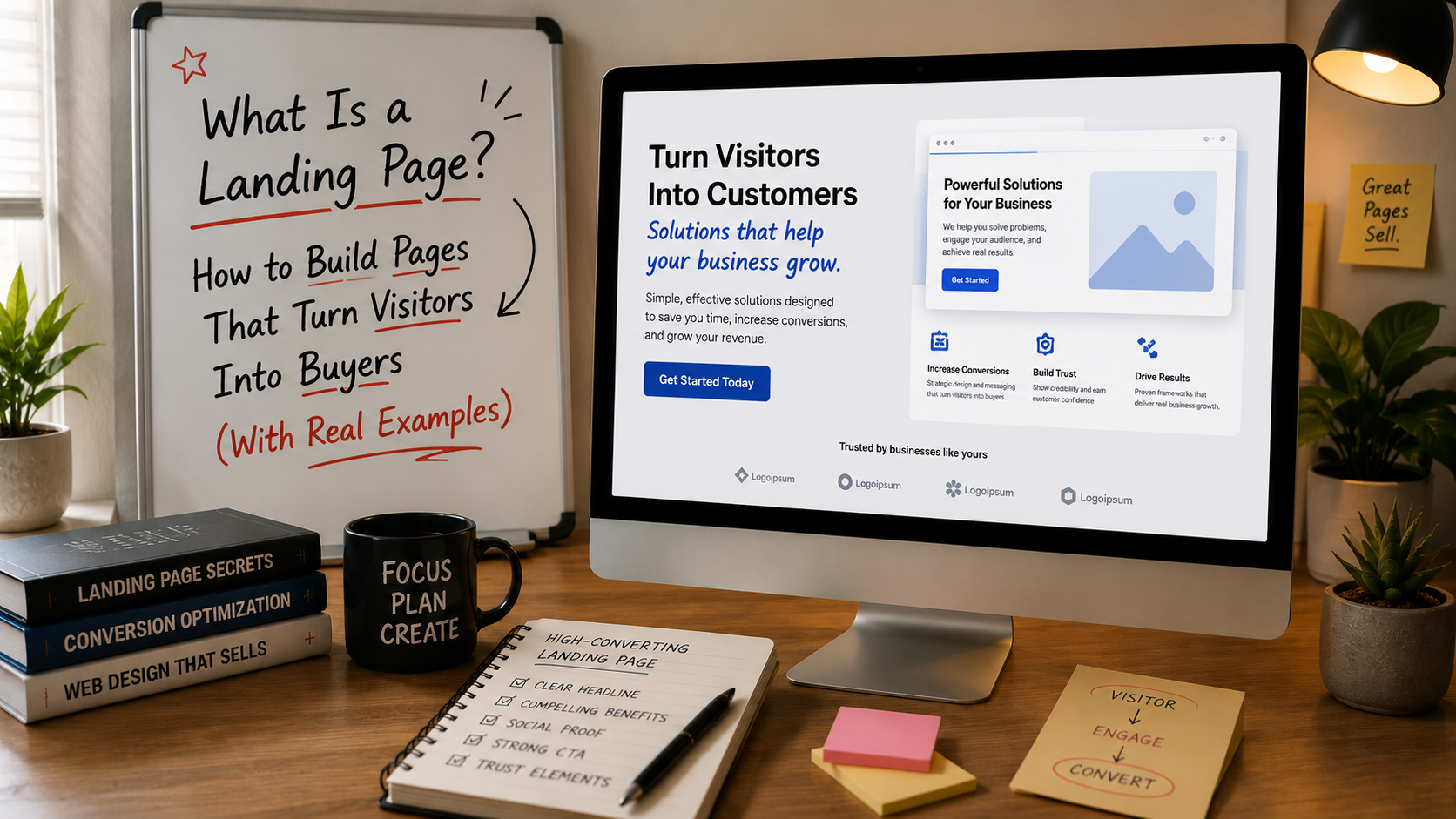
A landing page is a standalone web page designed for one single purpose, which is to convince a visitor to take one specific action. That action could be buying a digital product, signing up for a course, booking a consultation, downloading a free guide, or purchasing a physical product.
Unlike a regular website page that offers multiple navigation options and competing messages, a landing page eliminates distractions and focuses every element, such as the headline, the images, the copy, and the buttons, toward a single goal: conversion.
This is why landing pages consistently outperform regular website pages for advertising campaigns, product launches, and digital sales. When I send someone to a landing page, I am not asking them to explore. I am asking them to decide.
Landing Page vs Homepage: What Is the Difference?
This is one of the most common points of confusion I have noticed among beginners, and understanding it changed how I approach every campaign I run.
A homepage is designed to serve many different visitors with many different intentions. Someone visiting your homepage might want to learn about your company, browse multiple products, find your contact information, or read your blog. In essence, a homepage has multiple navigation links, multiple calls to action, and multiple paths a visitor can take.
However, a landing page is designed to serve one visitor with one specific intention. That is the exact intention that brought them there through your ad, your email, or your social media post. A landing page has no navigation menu, no distracting links, and ideally only one call to action repeated throughout the page.
Now, here is the practical difference: if I run a Facebook ad for my eBook and send traffic to my homepage like the Benedict Mindset blog, the visitor sees my blog, my other products, my about page, and my contact information and gets distracted before deciding to buy. But if I send the same traffic to a dedicated landing page about that specific eBook like my Selar page, every element on the page reinforces the same decision: buy this book now.
The Rule of thumb is this: Send paid traffic to landing pages. Send organic, exploratory traffic to your homepage.
Types of Landing Pages
Not every landing page serves the same purpose. Understanding the different types helps you choose the right structure for your specific goal.
1. Sales Landing Pages
This is designed to sell a specific product directly. This is the type most relevant for digital product creators, ecommerce sellers, and Shopify store owners. The entire page builds toward one call to action: “Buy Now.”
2. Lead Generation Landing Pages
This is designed to collect contact information, usually an email address, in exchange for something valuable, such as a free guide, checklist, or discount code. These pages prioritize a simple form over a purchase button like the one in my home page.
3. Click-Through Landing Pages
This is common in ecommerce. These pages provide additional product information before sending the visitor to a final checkout page. They serve as a warming step between the ad and the purchase.
4. Webinar or Event Registration Pages
This is designed specifically to get visitors to register for a webinar, masterclass, or live event, typically with a countdown timer and urgency-driven copy.
5. Squeeze Pages
It is a simplified version of a lead generation page with almost no information beyond a compelling headline, a brief benefit statement, and an email capture form. This type of landing page is mostly used for building email lists quickly.
Now, for most readers of this article who are into selling digital products, eBooks, or ecommerce products, sales landing pages are what you need to master first.
Why You Should Prioritize a Landing Page Over Anything Else
Here is what I wish someone had told me before I wasted $200 on ads pointing to the wrong destination: a landing page is the single highest-leverage asset in your entire sales process.
You can have a brilliant product. You can have compelling ad copy. You can have the perfect target audience. But if your landing page does not clearly communicate the value, address objections, and guide the visitor toward a decision, none of that matters. The sale dies on the page.
Read, How to Write Product Descriptions That Sell Using AI
A genuinely good landing page can make people buy without you ever speaking to them directly. No phone call. No back-and-forth WhatsApp negotiation. No sales pitch. The page does the entire job, which is explaining, persuading, and closing sales while you are asleep, working on something else, or running ten other campaigns simultaneously.
This is why I now build the landing page before I write a single line of ad copy. The ad’s only job is to get the click. The landing page’s job is everything that matters after that click.
How to Build a Landing Page That Turns Visitors Into Buyers
Before you build a landing page, you need to understand what you truly want and your audience’s behavior. If you are new to the business, the best option is to study your competitors’ landing pages. If you dont know how to find your competitors, you can read my article on how to find winning sales copy on Facebook. It will guide you through to your competitors’ landing pages through their social media Ad campaign.
Now, here is the exact structure I follow for every landing page I build, whether for my own digital products or for client projects.
1. A headline that states the outcome, not the feature
Your headline is the first thing a visitor reads. It must immediately answer the question every visitor has: “What is this and why should I care?”
Weak: “AI Hustle — An eBook About AI Tools”
Strong: “How to Make Your First $100 Online Using Free AI Tools — Even If You Have No Experience”
The strong version tells the visitor exactly what they get and removes their biggest objection in the same sentence.
2. A subheadline that builds on the promise
Directly below your headline, add one sentence that expands the promise or adds credibility. “A step-by-step guide written by someone who has personally built dollar income online using these exact tools.”
3. A clear, specific description of what they are buying
Do not make the visitor guess what they are getting. State clearly: is this an eBook, a course, a physical product, a service? How many pages, modules, or items? What format do they receive it in?
4. Benefit-focused bullet points
List three to five specific outcomes the buyer gets, not features. “Discover 8 real AI income streams you can start from your phone today” sells better than “Includes 8 chapters covering different AI tools.”
5. Social proof
If you have testimonials, reviews, or results from previous buyers, place them prominently. A single genuine testimonial can significantly increase your conversion rate because it answers the unspoken question every visitor has: “Does this actually work?”
6. Address the objection directly
Every product has a common objection that stops people from buying. Address it head-on. “You do not need experience. You do not need capital. You do not need technical skills.” Naming the objection and answering it immediately removes hesitation.
7. A clear, repeated call to action
Your call to action button should appear multiple times throughout the page: after the headline, after the benefits section, and at the very end. Use action-oriented text: “Get Instant Access Now” rather than a generic “Submit” or “Click Here.”
8. Urgency or scarcity where genuine
If there is a real reason for urgency, such as a launch price, a limited bonus, or a closing date, state it clearly. Never fake urgency. Visitors recognize manufactured scarcity quickly, and it damages trust.
9. Trust signals near the purchase button
Small trust signals like “Secure Checkout”, “Instant Access”, or “Trusted by 1,000+ Buyers” placed near your call to action button reduce last-second hesitation at the exact moment a visitor is deciding.
Designing a Landing Page That Converts
Structure tells the visitor what to think. Design tells them how to feel, and feeling drives the final decision more than most people realize.
Use one primary color for your call to action button: It should stand out clearly from everything else on the page. If your page uses blue and white throughout, your button should be a contrasting color like orange or red that the eye cannot miss.
Keep paragraphs short: Visitors scan before they read. Long blocks of text feel like work, and visitors abandon pages that feel like work. Break every idea into short, digestible chunks.
Use white space generously: A cluttered page feels overwhelming and untrustworthy. Generous spacing between sections makes your page feel premium and easy to navigate.
Match your visuals to your audience: If you are selling a digital product to young Africans, your imagery should reflect that audience, not generic stock photos of unrelated demographics. Relevant visuals build immediate connection.
Build mobile-first: The majority of your traffic, especially from Facebook and Instagram ads, will arrive on mobile devices. So, you have to test your page on a phone before launching any campaign. Buttons that are easy to tap, text that is easy to read without zooming, and fast loading speed all directly affect your conversion rate.
List of Tools You Need to Build Your Landing Page
You do not need coding skills to build a high-converting landing page in 2026. You only need to sign up on platforms that offer landing page templates. These platforms include;
Selar and Gumroad: If you are selling a digital product, these platforms provide built-in landing page functionality specifically designed for product sales. This is the fastest path for digital product creators.
Carrd: A simple, affordable tool for building single-page websites quickly. Excellent for beginners who want more design control than Selar’s built-in pages offer.
WordPress with Elementor: If you already run a blog, building a landing page directly on your domain using a page builder plugin like Elementor gives you full design flexibility and keeps everything under your own brand.
Shopify: For ecommerce sellers, Shopify’s landing page builder integrates directly with your product catalog and checkout system.
To get started, Use Claude or ChatGPT to write your landing page copy following the structure above, then bring the finished copy into whichever platform you choose to build the visual design.
Landing Page Examples That Convert
Here is a simplified example of a converting structure for a digital eBook, following the framework above:
Headline: How to Make Your First $100 Online Using Free AI Tools
Subheadline: Even if you have no experience, no capital, and no technical skills
Description: A complete step-by-step eBook showing you 8 real AI income streams you can start today
Benefits:
✅ Discover 8 proven AI income streams you can start from your phone
✅ Learn which free AI tools handle the hard work for you
✅ Get a complete guide to receiving dollar payments from anywhere across the globe
Objection handling: No experience. No capital. No technical skills required.
Social proof: “This book gave me the clarity I needed to start earning online” from a verified buyer
Call to action button: Get Instant Access Now
This same structure applies whether you are selling an eBook, a coaching service, a physical product, or a software subscription. The framework stays consistent. Only the specific content changes.
How to Drive Traffic to Your Landing Page
A landing page without traffic generates zero sales regardless of how well it is built. Here are the major ways I drive traffic to my landing pages:
Facebook and Instagram Ads: This is the fastest method I use to drive targeted traffic to my landing pages. Best for testing whether your landing page converts before investing in slower organic channels.
Pinterest: drives long-term, compounding traffic. A single pin can continue sending visitors to your landing page for years after posting.
SEO and Blog Content: Write articles that naturally lead readers to your landing page as the deeper resource for the problem you are discussing.
Email Marketing: If you have an existing list, emails driving traffic to a landing page typically convert at higher rates than cold traffic because trust is already established.
Organic Social Media Post: Consistent posting on Facebook, Instagram, X, and LinkedIn with your landing page link in your bio creates a steady stream of warm traffic over time.
Things to Consider When Building a Landing Page for a Client
If you are a freelancer or copywriter building landing pages as a service for clients, keep these in mind:
Understand their offer deeply before writing anything: A landing page is only as good as your understanding of what the client sells and who buys it.
Ask for existing customer feedback or testimonials: Real social proof from day one strengthens the page significantly.
Set clear expectations about revisions: Landing page projects can spiral into endless changes without a clear scope agreement upfront.
Test the page yourself before delivery: Click every button. Check it on mobile. Make sure the checkout or contact process actually works before handing it over.
Frequently Asked Questions
How long should a landing page be?
It depends on what you are selling. Low-cost digital products can convert with a shorter page like 300 to 500 words. Higher-priced products or services typically need longer pages like 800 to 1,500 words because more trust-building and objection-handling is required before a visitor commits.
Can I use the same landing page for multiple traffic sources?
Yes, but consider matching your landing page message to the specific ad or content that brought the visitor there. A visitor coming from a Facebook ad about dollar income should see a headline that matches that exact promise, not a generic page.
What is a good landing page conversion rate?
A conversion rate of 2 to 5 percent is considered solid for cold traffic from ads. Warm traffic from email or an engaged social media following can convert at 10 percent or higher. Track your numbers and improve incrementally rather than comparing yourself to inflated industry claims.
If you want to learn how to build complete sales systems — from landing pages to ad campaigns to digital products using AI tools? Get the AI Hustle eBook on Selar or Gumroad.
Leave a Reply