
Nobody gets excited talking about tracking grocery receipts or keeping the same car for eight years. I get it. These things sound boring. But after years of running my watch and jewellery business and watching how my most financially comfortable customers actually behaved, I noticed something: none of them got rich from one exciting decision. They got rich from doing boring things consistently, month after month, while everyone else chased excitement.
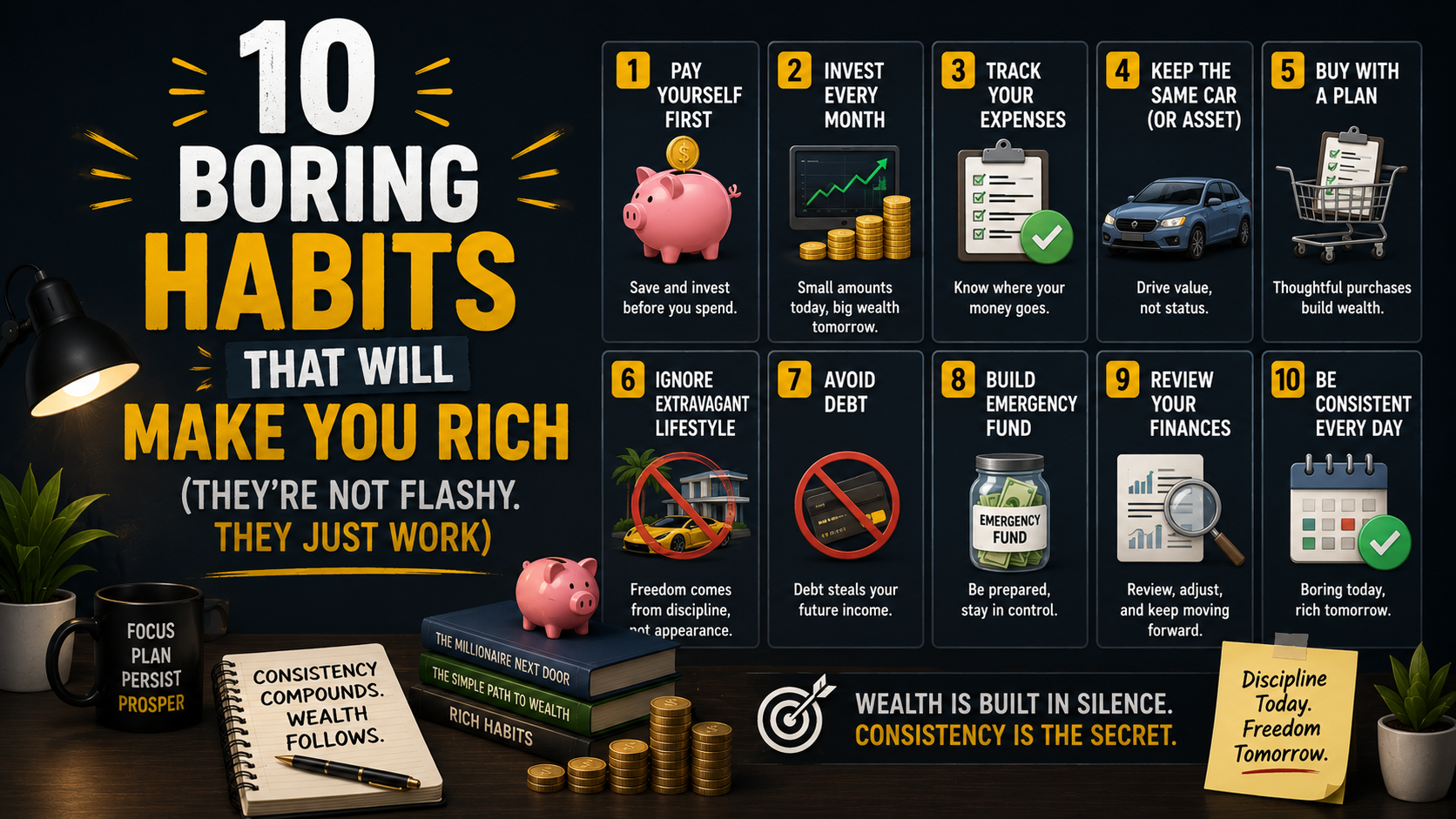
If you want to build real wealth, here are 10 boring habits that I have noticed, none of them flashy, that quietly separate people who build lasting financial security from people who never do.
10 Boring Habits That Will Make You Rich
1. Investing Every Month, Even When It Feels Too Slow
Consistent investing rarely feels exciting in the moment. You put money in, the growth is invisible week to week, and it is tempting to stop or pull out when nothing seems to be happening. But this is exactly the habit that compounds quietly in the background while you go about your normal life.
I started investing small amounts from my business profits long before I felt “ready,” and the slow, boring consistency mattered far more than any single big investment decision ever did.
How you can apply this: Pick a fixed amount, no matter how small, and invest it on the same day every month automatically, if possible, so the decision is removed entirely.
2. Paying Yourself First
This means setting money aside for savings or investments the moment income arrives, before you spend on anything else. Most people do the opposite. They spend first and save whatever happens to be left over, which usually ends up being nothing.
When I started paying myself first from every sale in my business, even a small fixed percentage, it forced me to run my business and my life within whatever remained, and that constraint, uncomfortable at first, is exactly what built real savings over time.
How you can apply this: Set up an automatic transfer to a savings or investment account the day your income arrives, before any other spending happens.
3. Repeating the Basics Long After They Feel Boring
This is the habit that ties every other habit on this list together. Building wealth is not about discovering some secret strategy nobody else knows; it is about repeating the same simple, boring principles long after they stop feeling new or exciting.
I noticed this directly with my wealthiest customers. They were not doing anything complicated. They were simply doing the obvious things, which are saving, investing, and spending intentionally for years, without getting distracted by the next trend or shiny opportunity.
How you can apply this: Resist the urge to constantly look for a smarter, faster method. The basics work precisely because almost nobody sticks with them long enough to see the results.
4. Keeping the Same Car (or Asset) Longer Than Feels Trendy
Upgrading your car, your phone, or your lifestyle every time you can technically afford to is one of the quietest ways to stay financially stuck without realising it. No car payment equals more freedom — freedom to save, invest, or absorb an unexpected expense without panic.
How you can apply this: Before upgrading anything significant, ask whether the upgrade is solving a real problem or simply satisfying a temporary desire for something new.
5. Tracking Every Dollar, Even the Small Ones
This sounds tedious, and it is, but small, unnoticed leaks genuinely sink big financial goals over time. Tracking your spending is not about restriction; it is about awareness. You cannot fix what you do not see clearly.
Read, What Are the 7 Levels of Wealth? A Simple Guide to Where You Stand (And Where You’re Going)
In my business, I learned this the hard way. Small, “insignificant” expenses I never tracked carefully added up to a meaningful chunk of my profit margin every single month, until I started actually paying attention.
How you can apply this: Track every expense for just one month, no matter how small. Most people are shocked by where their money is actually going once they see it written down clearly.
6. Buying With a Plan, Not on Impulse
Whether it is groceries, inventory, or anything else you regularly purchase, shopping with a clear plan reduces waste, reduces stress, and quietly protects your money from constant small leaks.
I started planning my inventory purchases for the watch business in advance instead of buying reactively whenever something looked appealing, and waste dropped significantly almost immediately.
How you can apply this: Before any regular purchase, such as groceries, supplies, or tools, write a simple list in advance and stick to it rather than deciding on the spot.
7. Ignoring Lifestyle Creep When Income Increases
Lifestyle creep happens when your spending quietly rises every time your income rises, until you are earning significantly more than before but somehow still have nothing left over. This is one of the sneakiest wealth killers because it never feels like a single bad decision. It feels like a series of perfectly reasonable upgrades.
Every time sales picked up in my business, the temptation to immediately upgrade my lifestyle was strong. Resisting that consistently is exactly what allowed the business and my personal savings to actually grow instead of staying flat.
How you can apply this: Whenever your income increases, decide in advance what percentage you will save or invest before you allow yourself to spend any of the increase.
8. Building an Emergency Fund Before Anything Else
This habit will never feel exciting, but it is the foundation everything else depends on. Without an emergency fund, a single unexpected expense can wipe out months of progress and force you back to financial square one.
I learned this directly when a shipment delay nearly derailed my entire business because I had no buffer set aside. It taught me permanently why this boring habit comes before almost anything else on this list.
How you can apply this: Set aside even a small fixed amount every month specifically labelled “emergency fund” and do not touch it for anything else, no matter how tempting.
9. Avoiding Debt for Things That Lose Value
Borrowing money for something that loses value the moment you own it is one of the most common, quietly damaging financial habits people fall into. This is different from borrowing for something that grows in value or generates income. The distinction matters enormously.
When I needed to expand inventory in my business, I was deliberate about only taking on debt that would directly generate more revenue and pay for itself, rather than debt for things that simply sat there depreciating.
How you can apply this: Before taking on any debt, ask whether it is funding something that will grow in value or generate income, or something that will simply lose value the moment you walk away with it.
10. Reviewing Your Finances on a Fixed Schedule
This is perhaps the most boring habit on the entire list and also one of the most overlooked. Regularly reviewing your spending, savings, and investments on a fixed schedule, rather than only checking when something feels wrong, catches small problems before they become big ones.
I started reviewing my business finances on a fixed weekly schedule instead of only checking when I felt anxious about money, and it completely changed how early I could catch and fix small issues before they grew.
How you can apply this: Pick one fixed day every week or month, the same day each time, to review your spending, savings, and any investments. Treat it as non-negotiable, even when everything seems fine.
Why Boring Habits Build Real Wealth
Looking back at every wealthy customer I served through my watch and jewelry business, the pattern was always the same. None of them got there through one exciting decision, one lucky break, or one clever trick. They got there through years of unglamorous, repeated discipline, exactly the kind of habits most people scroll past because they sound too ordinary to matter.
Rich is not built by exciting decisions. It is built by consistent ones. That single idea reshaped how I think about money, and it is the foundation behind everything on this list.
How to Start Building These Habits Today
You do not need to adopt all 10 habits simultaneously, as that approach usually leads to giving up on everything within a few weeks. Pick one habit from this list that feels most realistic for your current situation, apply it consistently for 30 days, then add the next one.
I made the mistake of trying to overhaul everything in my business finances at once, early on, and it mostly created confusion rather than progress. Slow, boring, repeated effort genuinely beats sudden, dramatic change almost every time.
Frequently Asked Questions
Which of these boring habits should I start with first?
Start with paying yourself first and building an emergency fund. These two create the foundation that makes every other habit on this list significantly easier to maintain consistently.
Why do boring financial habits work better than aggressive strategies?
Boring habits work because almost nobody sticks with them long enough to see meaningful results, while aggressive or exciting strategies tend to be abandoned quickly when they do not produce instant results. Consistency over time consistently outperforms intensity in short bursts.
How long does it take to see results from these habits?
Most of these habits show meaningful results after 6 to 12 months of consistent practice, though the earliest benefit, like reduced financial stress, is often felt within the first few weeks of starting.
If this article was helpful, share it with your friends and follow me on Facebook, X (formerly Twitter), and YouTube
Leave a Reply