
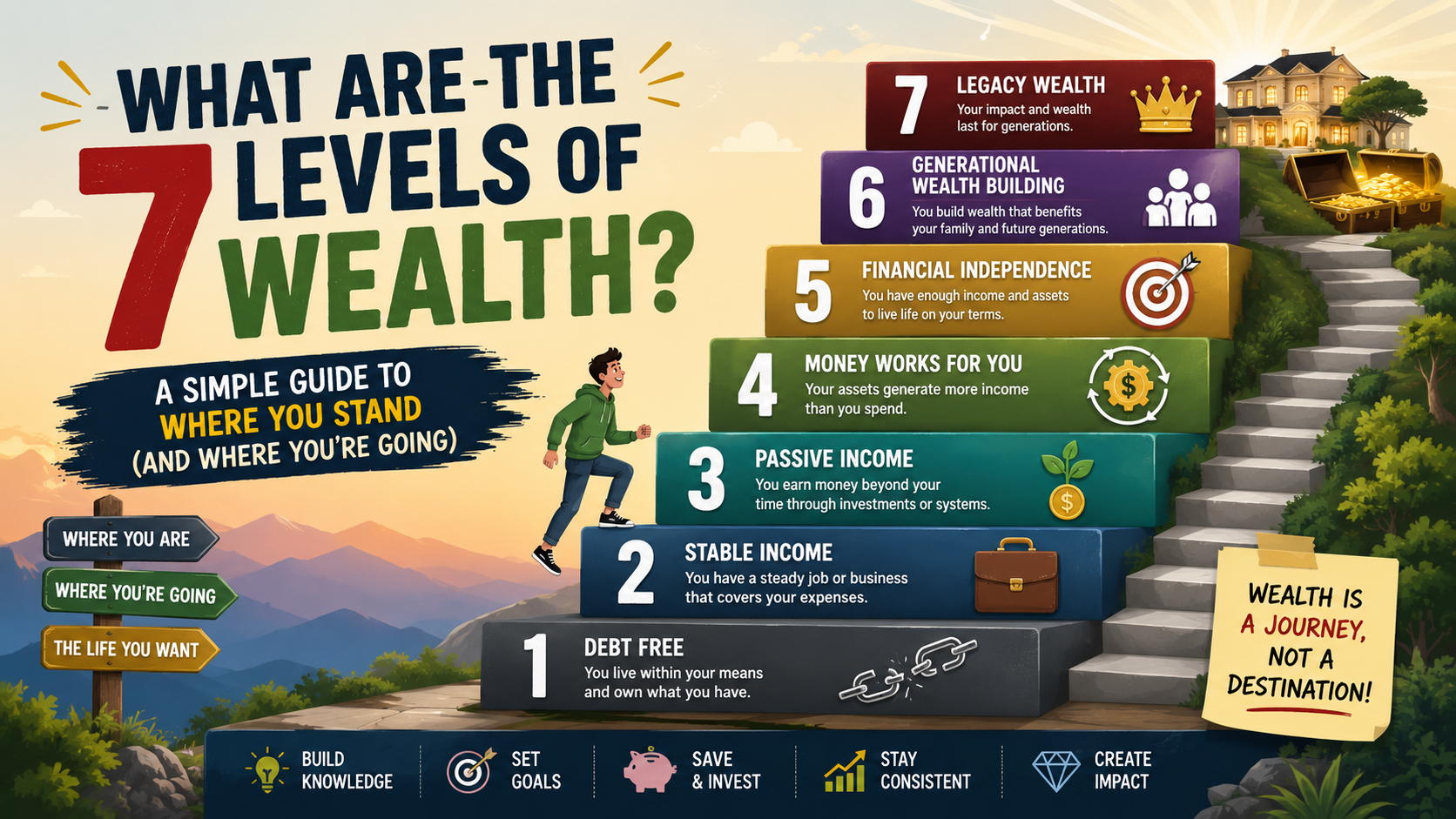
Most people stop at Level 2 and call it success. I refuse to.
I think about wealth differently now than I did a few years ago. Back then, “making it” meant paying my bills without stress. Today, that feels like just the beginning of a much longer climb; one I am still actively working my way up, level by level.
If you have ever wondered what it actually means to “build wealth,” this article breaks it down into 7 clear, honest levels, the same framework I use to track my own progress. By the end, you will know exactly where you stand right now, and more importantly, where you are headed next.
Why Most People Never Get Past Level 2
Here is something nobody tells you: most people spend their entire lives chasing financial security, reach a comfortable level, and quietly stop trying to go further. They pay off debt, build a small emergency fund, and call it success. I understand that instinct completely, but I made a personal decision a while ago that I was not going to stop there. I want to reach the highest level on this list, and I am writing this article as much for myself as for you. Let’s get started.
The 7 Levels of Wealth
Level 1: Debt-Free
You can pay your bills.
This is where everyone starts. You are not drowning in debt anymore, and your income covers your basic expenses without constant panic. It does not sound glamorous, but if you are here, you have already cleared a hurdle a lot of people never get past.
I remember exactly how this level felt, the relief of not owing anyone money, even while knowing I still had a long way to go. Being debt-free is genuinely worth celebrating, but it is the floor, not the ceiling.
How you know you’re here: Your bills are paid. You owe nothing you cannot cover. That’s it. Simple, but real.
Level 2: Stable Income
Emergency fund. No money stress.
This is the level most people quietly settle into and call “making it.” You have a steady income, a real emergency fund sitting untouched, and the constant low hum of money anxiety has finally gone quiet.
I will be honest. I lingered here longer than I should have, mostly because it genuinely feels good. No stress. No panic. Bills handled with room to spare. But comfort can be dangerous if it convinces you to stop climbing.
How you know you’re here: You have 3 to 6 months of expenses saved, and a slow month or unexpected bill does not derail your life anymore.
Level 3: Passive Income Covers Your Life
Work is optional.
This is where things start to shift fundamentally. Your passive income from investments, a business, royalties, or other income-generating assets covers your actual cost of living. You could stop working tomorrow and still meet your basic needs.
I am not fully here yet, but it is the level I think about every single day. Every income stream I build, every dollar I save instead of spending, every hour I put into learning something new, it all points toward this one specific goal: making work a choice, not a requirement.
How you know you’re here: Your passive income alone, without your active job or business hustle, covers your essential monthly expenses.
Level 4: Money Works for You
Assets growing every year.
At this level, you are no longer just covering your life with passive income; your actual net worth is climbing year over year, almost regardless of what you personally do day to day. Your investments are compounding. Your assets are appreciating. The money itself has become the main engine of growth, not your hours worked.
This is the level where the stock market, real estate, or business equity stop being side projects and start being the primary driver of your financial progress. You shift from “earning money” to genuinely “growing money.”
Read, 10 Money Rules Rich People Follow (And Why Most People Never Learn Them)
How you know you’re here: Your net worth increases meaningfully each year, even during months where you personally did very little extra.
Level 5: Financial Independence
You no longer need permission to make decisions.
This level goes beyond just covering your lifestyle; your wealth has reached a point where money is no longer the deciding factor in your major life choices. Want to take six months off? You can. Want to start a completely different business with no income for a year? You can absorb that.
This is genuinely rare, but understanding it exists changes how I think about every level beneath it. It is not about having unlimited money; it is about having enough freedom that money stops being the loudest voice in every decision you make.
How you know you’re here: A major life decision such as a career change, relocation, or time off is no longer primarily limited by whether you can afford it.
Level 6: Generational Wealth Building
You are actively building something that outlives a single lifetime.
At this stage, the focus shifts away from your own lifestyle entirely. You are deliberately structuring your wealth through trusts, businesses, investments, or property, so that it benefits people beyond just you. This requires a completely different mindset than every level before it: long-term thinking measured in decades, not years.
This is genuinely the level I think about when I imagine the version of myself ten or twenty years from now. Not just comfortable, but actively building something that survives long after I am gone.
How you know you’re here: You are making deliberate, structured decisions specifically designed to benefit future generations, not just your own current lifestyle.
Level 7: Legacy Wealth
It outlives you. It builds for the next generation.
This is the final level where your wealth has grown large enough and is structured well enough that it genuinely outlives you, continuing to support and build opportunities for people who come after you. This is not about how much you accumulated. It is about what continues to grow and give long after you are no longer the one managing it.
Very few people reach this level, and honestly, I do not know if I ever fully will. But it is the direction I am walking toward, one deliberate decision at a time, and I think that intention matters more than most people realize.
Where Are You Right Now?
Be honest with yourself for a moment. Are you still working toward Level 1, clearing debt and stabilizing your bills? Are you comfortably sitting at Level 2, where life feels manageable but growth has quietly stalled? Or are you actively pushing toward Level 3, building passive income streams that could one day make work optional?
I ask myself this question regularly because it is easy to get comfortable at any level and convince yourself you have arrived. The honest answer keeps me moving instead of settling.
How to Move to the Next Level, Starting With What You Have Right Now
You do not need a windfall or a lucky break to move up a level. All you need is one deliberate decision, repeated consistently.
If you are at Level 1, your only job right now is eliminating debt and protecting yourself from taking on more.
If you are at Level 2, comfortable but stagnant, your job is to start directing extra income into something that grows like investments, a side business, or an income-generating skill, instead of letting it sit idle or get spent on lifestyle upgrades.
If you are already building toward Level 3, your focus should be relentless: build, test, and scale as many income streams as you genuinely can, because passive income covering your life is not an accident; it is the direct result of deliberate effort sustained over time.
I am writing this article from somewhere between Level 2 and Level 3 myself, comfortable enough to feel settled, but unwilling to actually settle. If that resonates with you, you already know which level you are really on.
Frequently Asked Questions
What is the difference between being debt-free and financially independent?
Being debt-free means you owe nothing and can cover your bills. Financial independence means your assets or passive income are large enough that money no longer dictates your major life decisions. They are at very different levels on the same journey.
Can you skip levels of wealth?
Not realistically. Each level builds the financial habits and safety nets required for the next one. Trying to jump straight to aggressive investing or building passive income without first stabilizing your basic finances often backfires when an unexpected expense forces you to pull money out at the worst time.
Why do most people stop at Level 2?
Because Level 2 genuinely feels good as bills get paid, no stress, a stable life. It takes a deliberate decision to keep pushing past that comfort toward building real passive income and lasting wealth, which is exactly why most people quietly stop there and call it success.
If this article was helpful, share it with your friends and follow me on Facebook, X (formerly Twitter), and YouTube
Leave a Reply