
When I lost my job to AI in March 2025, the first thing I did was search Google for passive income ideas.
What came back was hundreds of articles from CNBC, Coursera, USBank, Wise, and Fidelity— all listing the same 20 ideas in a slightly different order. Dividend investing. Real estate. Dropshipping. Ideas that required capital I did not have, connections I did not have, or years of experience I did not have.
Nobody was writing for someone like me. A young bachelor with a phone, a laptop, and nothing but time and desperation.
So I stopped reading those articles and started testing things myself. Over the past year, I have personally built income streams using free AI tools that now generate money whether I am working or not. Some ideas worked immediately. Some took months. Some failed completely.
What you are about to read is not recycled advice from someone who has never tried any of this. These are passive income ideas I have personally explored using free AI tools that are available to anyone — regardless of location, experience, or capital.
Let us get into it.
What Is Passive Income?
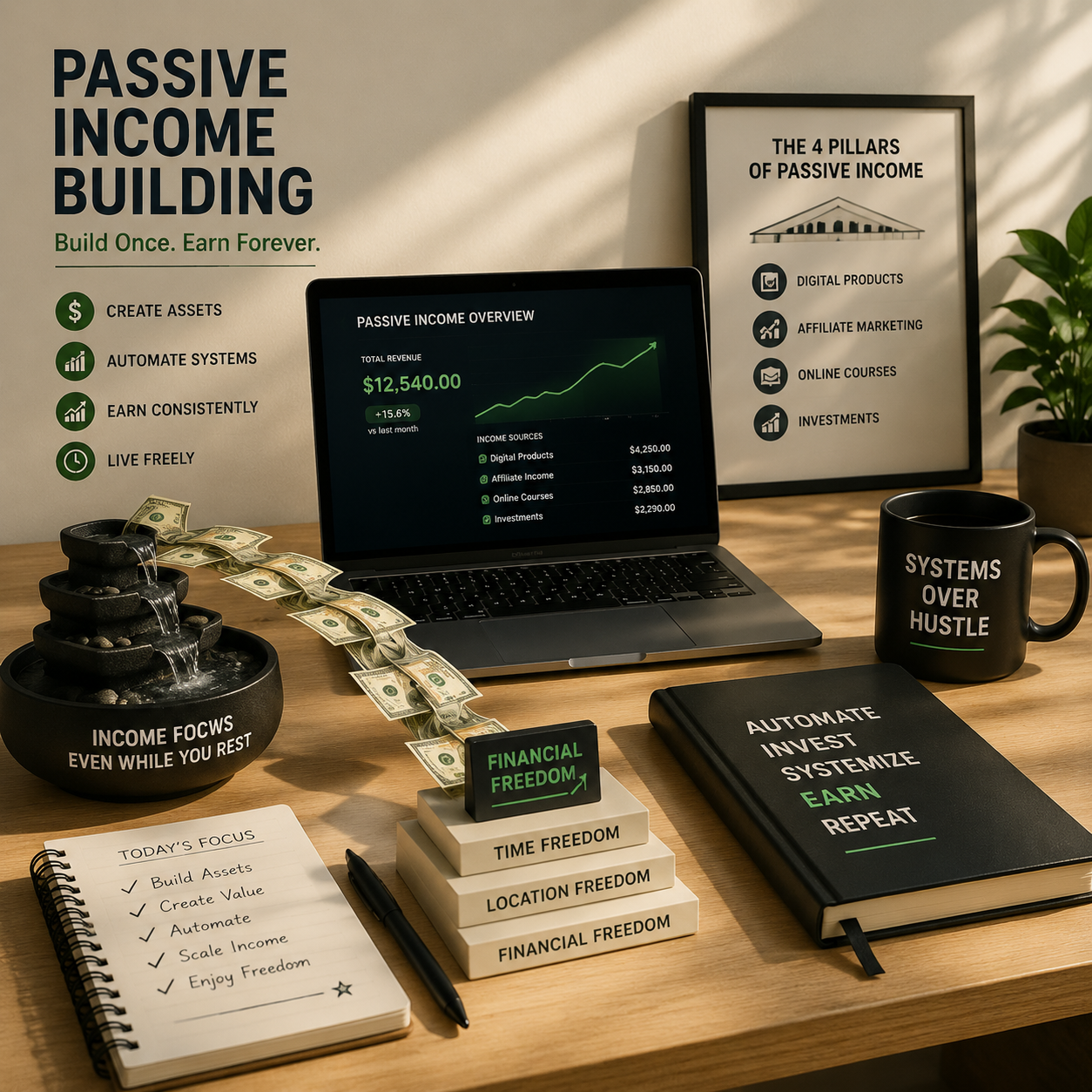
Passive income is money you earn with little to no ongoing active effort after an initial investment of time or work. Unlike a salary where you stop earning the moment you stop working, passive income continues flowing whether you are asleep, travelling, or working on something else entirely.
Take note of the keyword “initial”. Building passive income requires real effort upfront. The reward is that the work you do once keeps paying you repeatedly. For example, a book you write today can sell for the next ten years. A YouTube video you upload this month can earn ad revenue for as long as the channel exists. That is the power of passive income, and AI tools have made building these streams faster and more accessible than ever before.
15 Passive Income Ideas You Can Start Today
1. Sell an AI-Generated eBook
How it works: You research a topic your target audience is actively searching for, use Claude or ChatGPT to write the content, design the cover in Canva, and sell it on Selar or Gumroad. Once it is live, it sells automatically without you doing anything additional, except running social media promotions to reach people who need the eBook.
How to get started: Choose a topic you have knowledge in. Use ChatGPT to research demand and Claude to write chapter by chapter. Design your cover in Canva. Upload to Selar for African buyers and Gumroad for international buyers.
Platforms: Selar, Gumroad, Amazon KDP.
Pros:
- Create once and sell forever
- No inventory or shipping
- Completely free to create using AI tools
Cons:
- Requires upfront research and writing time
- Needs consistent promotion to drive sales
2. Publish Books on Amazon KDP
How it works: Amazon Kindle Direct Publishing allows you to publish fiction or non-fiction books and earn royalties every time someone buys or reads your work through Kindle Unlimited. With AI book writing tools like Claude, you can research trending niches, write an entire book, design the cover, and publish within a week.
How to get started: Create a free KDP account at kdp.amazon.com. Research trending niches using Publisher Rocket to find easy-to-rank keywords and best categories to place your book. Use Claude to write your book and Canva to design the cover. Enroll in KDP Select to access Kindle Unlimited readers.
Platforms: Amazon KDP
Pros:
- Access to Amazon’s hundreds of millions of active buyers
- Royalties of up to 70% per sale
- One book can earn for years
Cons:
- Takes time to rank in competitive categories
- Requires keyword research to be discoverable
- Takes time to write a quality book
3. Create and Sell an Online Course
How it works: If you have knowledge in any area — AI tools, freelancing, copywriting, social media, photography — you can package it into a short video course and sell it repeatedly. Use Claude to write the curriculum and scripts. Record lessons on your phone. Edit with CapCut. Host and sell on Selar or Gumroad.
How to get started: Choose a topic you know well. Use Facebook to identify the top questions your target audience is asking. Use Claude to turn those questions into a structured course outline. Record one module at a time and edit using CapCut. Upload to Selar and set your price.
Platforms: Selar, Gumroad, Teachable, Udemy.
Pros:
- High income potential — courses sell for significantly more than eBooks.
- One course can generate income for years
- Positions you as an authority in your niche
Cons:
- More time-intensive to create than an eBook
- Requires promotion and audience building to drive consistent sales.
4. Start a Faceless YouTube Channel
How it works: A faceless YouTube channel publishes videos without ever showing your face. You use ChatGPT for research, Claude for scripts, ElevenLabs for voiceover, and CapCut for editing. Once your channel reaches 1,000 subscribers and 4,000 watch hours, you apply for YouTube monetisation and begin earning ad revenue on every video — including old ones.
How to get started: Choose a micro niche such as finance, motivation, AI income, true crime documentary, history. Research top-performing channels in that niche. Download and transcribe their top-performing videos and read them to understand the flow. Follow the pattern and write your first script using Claude or ask Claude to write a similar script. Generate your voiceover on ElevenLabs. Edit in CapCut and publish consistently at least twice per week.
Platforms: YouTube
Pros:
- Ad revenue grows as your video library grows
- Multiple monetisation streams — ads, affiliate links, digital product sales
- Finance niche pays some of the highest ad rates on YouTube
Cons:
- Takes three to six months of consistent publishing before significant income
- YouTube algorithm changes can affect channel performance
- The subscription of the AI tools needed can be costly.
5. Affiliate Marketing
How it works: AI affiliate marketing involves recommending products or services using a unique trackable link. Every time someone purchases through your link, you earn a commission without handling any product, payment, or delivery. AI tools accelerate every part of the process from content creation to promotion.
How to get started: Sign up for affiliate programs relevant to your niche such as Amazon Associates, Selar affiliate program, PartnerStack, or individual tool affiliate programs like ElevenLabs or Canva. Create content like blog posts, YouTube videos, social media posts that naturally recommends these products. After that, you include your affiliate link in every piece of content.
Platforms: Amazon Associates, Selar, Gumroad, PartnerStack, Canva, etc.
Pros:
- No product creation required
- Commissions can be earned from content published months or years ago
- Can be combined with every other passive income stream on this list
Cons:
- Requires consistent content creation to drive traffic to your links.
- Commission rates vary widely across programs.
6. Sell AI-Generated Stock Images and Digital Art
How it works: Using popular AI image generator tools like Midjourney, Adobe Firefly, and ChatGPT’s image generator, you create themed collections of high-quality images and sell them as stock bundles. Bloggers, content creators, and small businesses consistently need fresh visuals, and many prefer buying curated bundles over searching stock sites individually. You can also take pictures of your surrounding and use AI to edit it and sell it online.
How to get started: Choose a theme like African business, technology, nature, abstract art. Generate a collection of 20 to 50 images using Adobe Firefly or ChatGPT’s image generator. Package them into a ZIP file. Upload to Selar, Gumroad, or Creative Market and set your price.
Platforms: Selar, Gumroad, Creative Market, Shutterstock, Adobe Stock
Pros:
- Create once and sell the same collection indefinitely
- No customer service required after purchase
- Growing demand as content creators need fresh visuals constantly
Cons:
- The market is becoming more competitive as AI image tools become mainstream
- Some stock platforms have restrictions on AI-generated images. So, read their policies carefully
7. Build and Sell Notion Templates
How it works: Notion is a productivity tool used by millions of professionals, students, and entrepreneurs worldwide. Pre-built Notion templates like business dashboards, content calendars, goal planners, client management systems are in consistent demand. You build the template once and sell it repeatedly as a digital product.
How to get started: Create a free Notion account at notion.so. Choose a template type that solves a specific problem such as a content calendar for social media managers, a freelance client tracker, a 30-day goal planner. Use Claude to help you structure the template logically. Upload to Gumroad or Selar and price between $5 and $30.
Platforms: Gumroad, Selar, Etsy, Notion’s own marketplace.
Pros:
- Very fast to create as a simple template takes a few hours
- Extremely low overhead as no design skills required beyond basic Notion knowledge
- High demand among productivity-focused buyers globally
Cons:
- Individual templates sell at lower price points than eBooks or courses
- Requires bundling multiple templates to increase average transaction value
- Requires marketing to sell.
8. Create and Sell Prompt Packs
How it works: As more people start using AI tools for business, the demand for high-quality, ready-to-use prompts is growing fast. A prompt pack is a curated collection of tested prompts for a specific use case. For example, “50 ChatGPT Prompts for Freelance Copywriters or 30 Claude Prompts for YouTube Script Writers”. You create it once and sell it forever.
How to get started: Choose a specific audience and use case. Test and refine 30 to 50 prompts that produce consistently strong results for that audience. Package them in a PDF or Notion document. Upload to Selar or Gumroad and price between $5 and $20.
Platforms: Selar, Gumroad, Etsy
Pros:
- Extremely fast to create. All you need is a few hours of prompt testing and documentation
- High perceived value for buyers who struggle with AI prompting
- Growing market as AI adoption increases globally
Cons:
- Market is filling up quickly. So, you have to differentiate with a very specific niche audience
- Requires regular updates as AI tools evolve and improve.
9. Start a Blog with Affiliate Links and Digital Product Sales
How it works: A blog targeting the right keywords attracts organic traffic from Google month after month. That traffic converts into affiliate commissions, digital product purchases, and eBook sales, all without you actively working to generate each sale. AI blog writer tools like Claude and ChatGPT can help you produce keyword-optimised articles consistently.
How to get started: Choose your niche like AI income, freelancing, passive income. Set up a WordPress blog on your own domain. Use ChatGPT to identify high-traffic keywords your audience is searching for. Use Claude to write detailed, valuable articles targeting those keywords. Include affiliate links and calls to action to your digital products naturally within each article.
Platforms: WordPress, Wix, Medium, Pinterest.
Pros:
- Compounds over time as more articles mean more traffic and more income
- Multiple monetisation streams from a single platform like affiliate marketing, google adsense, etc.
- Google traffic is free and permanent once articles rank
Cons:
- Takes three to six months before articles rank on Google
- Requires consistent publishing to build and maintain traffic
10. Pinterest Traffic Funnel
How it works: Pinterest is a visual search engine with hundreds of millions of monthly users actively looking for ideas, guides, and resources. You create branded pins linking to your blog articles or directly to your Selar page or ebook store. Each pin drives traffic indefinitely. A pin posted today can bring visitors two years from now.
How to get started: Create a Pinterest Business account. Design branded pins using Canva AI — one pin per blog article or digital product. Write keyword-rich pin descriptions. Pin consistently — five to ten pins daily. Link every pin to your blog or your ebook store landing page.
Platforms: Pinterest
Pros:
- Completely free traffic source
- Pins have an extremely long lifespan compared to social media posts
- Drives highly targeted traffic to your products
Cons:
- Takes two to three months of consistent pinning before significant traffic builds
- Requires consistent design effort to maintain pin quality
11. AI Voiceover Services on Autopilot
How it works: Using ElevenLabs, you can generate professional voiceovers for clients and deliver them digitally without any physical interaction. Once you set up a Fiverr gig or Upwork for voiceover services, orders come in automatically, and you fulfil them using AI voice generator tools in minutes.
How to get started: Create a free ElevenLabs account. Generate three sample voiceovers in different styles. Create a Fiverr gig or Upwork account offering AI voiceover services. Upload your samples as the gig portfolio. Price between $10 and $50 per minute of audio.
Platforms: Fiverr, Upwork
Pros:
- Orders can come in while you sleep once your gig is ranked
- Fast delivery. A one-minute voiceover takes less than ten minutes to produce.
- Recurring clients once they trust your quality
Cons:
- Fiverr takes a 20% commission on every order while Upwork charges between 10 – 20% commission.
- Requires active gig management to maintain ranking
12. Social Media Page Monetisation
How it works: You build a social media page around a specific niche using AI-generated content such as quote graphics, tips, infographics, short videos. Then you grow the audience organically, and monetise through sponsored posts, affiliate links, and digital product sales. AI automation tools handle content creation while you focus on growth strategy.
How to get started: Choose a niche such as AI income, personal finance, motivation, relationships. Create a Facebook, instagram page or X account. Use Canva AI to design weekly content batches. Use ChatGPT to write captions. Post consistently five times per week. Once you reach 1,000 engaged followers, begin reaching out to brands for sponsorship deals.
Platforms: Facebook, Instagram, X, TikTok
Pros:
- Free to build as their is no startup costs involved.
- Multiple monetisation options once audience is established
- AI tools make content creation sustainable without burnout
Cons:
- Takes consistent effort over several months to build a monetisable audience
- Platform algorithm changes can affect reach overnight
13. Sell Spreadsheet and Document Templates
How it works: Budget trackers, business expense sheets, invoice templates, social media content calendars built in Google Sheets or Microsoft Excel are in consistent demand from small business owners, freelancers, and students. These are simple to create with AI guidance and sell repeatedly as digital downloads.
How to get started: Choose a specific template type with clear demand. Use Claude to help you structure the logic and layout. Build the template in Google Sheets or Excel. Export as a downloadable file. Upload to Selar or Gumroad with a clear description of what it does and who it is for.
Platforms: Selar, Gumroad, Etsy, Creative Market
Pros:
- Very fast to create
- High demand from small business owners and freelancers
- Easy to bundle multiple templates to increase sale value
Cons:
- Lower price point than courses or comprehensive eBooks
- Requires clear documentation so buyers know how to use the template
14. License Your AI-Generated Music
How it works: AI tools like Suno AI and Udio can generate original music tracks in minutes. You create themed music collections such as background music for YouTube videos, podcast intros, meditation tracks, corporate presentation music and license them to content creators who need royalty-free audio for their projects.
How to get started: Create a free Suno AI account at suno.ai. Generate 20 to 30 tracks across different moods and themes. Upload to music licensing platforms. Set a licensing fee and earn every time a creator purchases the rights to use your track.
Platforms: Pond5, AudioJungle, Musicbed, Bandcamp
Pros:
- Completely AI-generated — no musical skill required
- Each track can be licensed multiple times to different buyers
- Growing demand as content creation continues to expand globally
Cons:
- Platform policies on AI-generated music vary. So, always read terms carefully before uploading
- The market is competitive and requires volume to generate meaningful income
15. Build a Niche Newsletter
How it works: A newsletter is a curated email sent to subscribers on a regular schedule like weekly or bi-weekly. You build a subscriber list around a specific topic, use ChatGPT to help research and write each edition, and monetise through sponsored placements, affiliate links, and digital product recommendations. Once your list grows, each edition generates income automatically.
How to get started: Choose a niche your audience cares about like AI tools weekly roundup, passive income ideas, freelancing opportunities across the globe. Create a free account on Beehiiv or Mailchimp. Set up a simple landing page offering a free lead magnet like a checklist, a short guide, or a free chapter of your eBook and in exchange for an email address. Now, promote your newsletter signup across your blog, social media, and YouTube channel.
Platforms: Beehiiv, Mailchimp, Substack, ConvertKit
Pros:
- You own your email list as no algorithm can take it from you
- Highly engaged audience that converts into buyers consistently
- Sponsorship rates grow significantly as your list size increases
Cons:
- Takes time to build a list large enough to monetise meaningfully
- Requires consistent quality to retain subscribers and reduce unsubscribes
Where to Start
I know the above fifteen options can feel overwhelming to you. So, the smartest move is to choose the one that matches where you are right now:
- No audience yet — start with an eBook on Selar or books on Amazon KDP. You can drive traffic through Facebook ads without needing an existing following
- You enjoy writing — start a blog and build affiliate income alongside digital product sales
- You prefer video — launch a faceless YouTube channel and build ad revenue over time
- You want the fastest passive income — create a prompt pack or Notion template. Both can be live on Selar within 48 hours
The goal is not to do all fifteen. The goal is to do one well enough that it generates consistent income. After, you then add the next one.
Are you ready to go deeper? The AI Hustle eBook covers eight of these income streams in complete step-by-step detail — from setup to first sale. Written specifically for anyone across the globe building dollar income online.
Leave a Reply